ACVRL1 (Ascrinvacumab Biosimilar) Recombinant Monoclonal Antibody
-
貨號(hào):CSB-RA001262MB1HU
-
規(guī)格:¥83486
-
其他:
產(chǎn)品詳情
-
產(chǎn)品描述:ACVRL1(Ascrinvacumab Biosimilar Antibody)重組單克隆抗體是一種靶向ACVRL1蛋白。ACVRL1,又稱活化素A受體樣激酶1(ALK-1),屬于轉(zhuǎn)化生長因子-β(TGF-β)超家族I型受體,在血管生成、內(nèi)皮細(xì)胞功能調(diào)節(jié)中發(fā)揮關(guān)鍵作用。該抗體的來源于重組人ACVRL1蛋白,具有高度的種屬反應(yīng)性,主要針對(duì)人類ACVRL1蛋白發(fā)揮特異性結(jié)合作用。其別名包括ALK1抗體、HHT2抗體等,反映了其與遺傳性出血性毛細(xì)血管擴(kuò)張癥2型(HHT2)等疾病的密切關(guān)聯(lián)。 Ascrinvacumab Biosimilar Antibody的開發(fā)聚焦于血管異常相關(guān)疾病。HHT2是一種因ACVRL1基因突變導(dǎo)致的遺傳性血管疾病,患者常出現(xiàn)反復(fù)出血、動(dòng)靜脈畸形等癥狀。該抗體研發(fā)的藥物可通過阻斷異常激活的ACVRL1信號(hào)通路,抑制血管畸形的形成與進(jìn)展,為HHT2的靶向治療提供了新策略。此外,其在腫瘤血管生成治療中也展現(xiàn)潛力,通過抑制腫瘤新生血管形成,可能延緩實(shí)體瘤的生長與轉(zhuǎn)移,目前相關(guān)臨床試驗(yàn)正探索其在結(jié)直腸癌、肝癌等惡性腫瘤中的聯(lián)合治療價(jià)值。 ACVRL1抗體是研究TGF-β信號(hào)通路及血管生物學(xué)的重要工具。借助其對(duì)人ACVRL1蛋白的特異性識(shí)別能力,精準(zhǔn)檢測(cè)ACVRL1在細(xì)胞及組織中的表達(dá)定位與磷酸化水平,揭示其在胚胎發(fā)育、血管穩(wěn)態(tài)及疾病發(fā)生中的分子機(jī)制。同時(shí),該抗體可用于構(gòu)建ACVRL1信號(hào)阻斷的細(xì)胞模型或動(dòng)物模型,助力篩選調(diào)控血管生成的關(guān)鍵下游分子,為開發(fā)新型血管靶向藥物提供實(shí)驗(yàn)基礎(chǔ)。其高度的特異性和親和力,使其成為血管生物學(xué)、腫瘤學(xué)及遺傳性血管疾病機(jī)制研究中的常用試劑。
-
Uniprot No.:
-
基因名:
-
別名:Activin A receptor antibody; Activin A receptor type II like 1 antibody; Activin A receptor; type II like kinase 1 antibody; Activin receptor like kinase 1 antibody; Activin receptor-like kinase 1 antibody; ACVL1_HUMAN antibody; ACVRL1 antibody; ACVRLK1 antibody; ALK-1 antibody; ALK1 antibody; HHT antibody; HHT2 antibody; ORW2 antibody; Osler Rendu Weber syndrome 2 antibody; Serine/threonine protein kinase receptor R3 antibody; Serine/threonine-protein kinase receptor R3 antibody; SKR3 antibody; TGF B superfamily receptor type I antibody; TGF-B superfamily receptor type I antibody; TSR-I antibody; TSR1 antibody
-
反應(yīng)種屬:Human
-
免疫原:Recombinant Human ACVRL1 protein
-
免疫原種屬:Homo sapiens (Human)
-
標(biāo)記方式:Non-conjugated
-
克隆類型:Monoclonal
-
濃度:It differs from different batches. Please contact us to confirm it.
-
保存緩沖液:0.01M PBS,pH7.4
-
產(chǎn)品提供形式:Liquid
-
應(yīng)用說明:Validation Status
Application-specific performance (e.g., in flow cytometry, ELISA, IHC or other assay formats) has not yet been experimentally verified by CUSABIO. Users are advised to determine the optimal working conditions empirically in their own assay systems.
Guaranteed Quality
① Antibody purity?> 95% tested by SDS-PAGE.
② Endotoxin level < 0.1EU/ug tested by LAL method. -
儲(chǔ)存條件:Upon receipt, store at -20°C or -80°C. Avoid repeated freeze.
-
貨期:In stock
-
用途:It is a non-therapeutic biosimilar antibody, owning the same variable region from the corresponding approved therapeutic antibody. In conclusion, it is a research-grade biosimilar antibody and expressed in mammalian cell, which can be directly used as positive controls in drug discovery or used for rapid verification of the biological functions of target protein.
產(chǎn)品評(píng)價(jià)

相關(guān)產(chǎn)品
靶點(diǎn)詳情
-
功能:Type I receptor for TGF-beta family ligands BMP9/GDF2 and BMP10 and important regulator of normal blood vessel development. On ligand binding, forms a receptor complex consisting of two type II and two type I transmembrane serine/threonine kinases. Type II receptors phosphorylate and activate type I receptors which autophosphorylate, then bind and activate SMAD transcriptional regulators. May bind activin as well.
-
基因功能參考文獻(xiàn):
- Heterozygous SNP, rs372023206, was found in all tested patients with idiopathic pulmonary hypertension (heterozygosity). PMID: 29350394
- ENG, ACVRL1, and SMAD4 mutations result in different phenotypes in hereditary hemorrhagic telangiectasia PMID: 30251589
- ENG mutation carriers were more likely than ACVRL1 mutation carriers to have pAVMs (P < 0.001) or multiple lesions (P = 0.03), and to undergo procedural intervention (P = 0.02). The HHT severity score was significantly higher in ENG than in ACVRL1 (P = 0.02). PMID: 29048420
- These studies identified pathways mediating LDLR-independent uptake of LDL may provide unique opportunities to block the initiation of LDL accumulation in the vessel wall or augment hepatic LDLR-dependent clearance of LDL. PMID: 27869117
- We have identified a novel role for ALK1 in cardiac remodeling PMID: 28820968
- The present study showed that deletion-duplication mutations in the BMPR2 or ACVRL1 genes may not be associated with non-regression of Pulmonary arterial hypertension. PMID: 28290170
- Study identified 2 non-synonymous missense mutations: c.C652T, p.R218W in ACVRL1, c.C717G, p.D239E in SGCD in Chinese population with total anomalous pulmonary venous return. PMID: 28412737
- Mutations in ACVRL1 gene encoding for transforming growth factor (TGF)-[beta] superfamily have been identified in Pulmonary Arterial Hypertension. PMID: 28582316
- Treatment-related telangiectasia was noted in 7% of patients, suggesting in vivo inhibition of the ALK-1 pathway. PMID: 26655846
- Data indicate that simultaneous targeting of molecules that control distinct phases of angiogenesis, such as ALK1 and VEGFR, is a valid strategy for treatment of metastatic renal cell carcinoma (mRCC). PMID: 27248821
- Study showed that rs706819, rs2293094, and rs11169953 polymorphisms in the ACVRL1 gene are associated with higher susceptibility to brain arteriovenous malformations. PMID: 28927913
- c.1027C > T(p.Gln343) mutation within the ACVRL1 gene in family with hereditary hemorrhagic telangiectasia PMID: 27381467
- Bone morphogenetic protein (BMP)9 and BMP10 are high affinity ligands for activin receptor-like kinase 1 (ALK1). PMID: 27528761
- Activin receptor-like kinase (ALK)1 is a transforming growth factor beta (TGF-beta) type I receptor predominantly expressed in actively proliferating endothelial cells (ECs). PMID: 27528762
- Two novel missense mutations and two recurrent mutations in the ACVRL1 gene are associated with pulmonary arterial hypertension in in Chinese families. PMID: 27316748
- ALK1 expression and microvessel density are increased in oral lichen planus , particularly in atrophic/erosive OLP type. PMID: 26662187
- The genetic-interactions among BMPR-2, ALK-1, and 5-HTT polymorphisms, elevated BMP-2 and 5-HT levels and differential gene expression substantiated the strong genetic contribution in high altitude pulmonary edema pathophysiology. PMID: 27196063
- Study of four patients with pulmonary arterial hypertension associated with human immunodeficiency virus infection found predisposing mutations in the BMPR2, ACVRL1 and ENG genes. PMID: 26897508
- The preponderance of ACVRL1 mutations was due to founder mutations, specifically, c.830C>A (p.Thr277Lys), which was found in 24 families from the same geographical area of Norway. PMID: 25970827
- Report interaction between ALK1 signaling and connexin40 in the development of arteriovenous malformations. PMID: 26821948
- Short hairpin-mediated downregulation of either ALK5 or ALK1 resulted in a strong inhibition of TGFbeta-induced chondrogenesis. PMID: 26720610
- This work was designed to examine the pathogenicity of 23 nucleotide variations in ACVRL1 gene detected in more than 400 Hereditary Hemorrhagic Telangiectasia syndrome patients. PMID: 26176610
- The ACVRL1 c.314-35A>G polymorphism is associated with organ vascular malformations in hereditary hemorrhagic telangiectasia patients with ENG mutations, but not in patients with ACVRL1 mutations. PMID: 25847705
- bone morphogenic proteins within the serum of cell culture medium are potent inducers of endothelial Hey1 and Hey2 gene expression within the first few hours after medium change PMID: 25799559
- endoglin and ALK1 have been identified as potential therapeutic targets for antibody treatment in various cancers. PMID: 25279424
- Mutations in ACVRL1 gene is not associated with pulmonary arterial hypertension. PMID: 24936649
- In chronic subdural hematomas, the expression of ALK-1 was slightly increased in the dura and markedly up-regulated in the outer membrane. PMID: 24305026
- P7170 inhibited the phosphorylation of AKT1. PMID: 25466244
- Endoglin and ACVRL1 contribute to several novel networks, including TGF-beta dependent and independent ones, critical for vascular function and potentially defective in hereditary hemorrhagic telangiectasia. PMID: 24319055
- Results do not replicate the association between polymorphism in ACVRL1 protein and BAVM in this Dutch population. PMID: 24323303
- Results show that mutations of ACVRL-1 protein is a genetic predisposing factor for HHT associated PH in Chinese patients PMID: 23919827
- Consistent with the aberrant upregulation of ACVRL1 and downstream Smad signaling, abrogation of EDD led to deregulated vessel development and endothelial cell motility. PMID: 24189493
- shows role of ALK-1 in many process related to cardiovascular homeostasis, and the involvement of this protein in the development of cardiovascular diseases, suggesting the possibility of using the ALK-1/smad-1 pathway as a powerful therapeutic target PMID: 23707512
- A novel intron mutation in ACVRL1 gene is associated with familial hereditary hemorrhagic telangiectasia. PMID: 23460919
- The balance in signalling through either ALK-1 or ALK-5 regulates leptin expression in mesenchymal stem cells. PMID: 22087763
- ACVRL1 gene expression is significantly corellated with advanced tumor stages and it is a useful marker for prognosis. PMID: 23447486
- Defective trafficking and retention in the endoplasmic reticulum of mutant ALK1 protein is a possible mechanism of hereditary haemorrhagic telangiectasia type 2 in some patients. PMID: 23124896
- ALK1 is upregulated in endothelial cells during vascular injury by a synergistic cooperative mechanism between KLF6 and specificity protein 1. PMID: 23048070
- Alk1 interacts with cav-1 in human dermal fibroblasts and Transforming Growth Factor beta enhances this association. PMID: 22277251
- Inheritance of ACVRL1 single nucleotide polymorphisms marginally contributed to the risk of cutaneous telangiectasiae. PMID: 22677372
- The abnormal expression of ALK1 and TGFbR2 were found to be independent contributors to nasopharyngeal carcinogenesis. PMID: 22391627
- Patients with childhood idiopathic pulmonary arterial hypertension or heritable pulmonary arterial hypertension with ALK1 mutation carriers tended to have worse outcomes than mutation noncarriers. PMID: 22632830
- The structure reveals that the high specificity of ALK1 for BMP9/10 is determined by a novel orientation of ALK1 with respect to BMP9, which leads to a unique set of receptor-ligand interactions PMID: 22718755
- Alk1 extracellular domain binds with high affinity to BMP-9. PMID: 22799562
- data suggest that both the VEGF/VEGF receptor and the BMP9/ALK1 pathways are essential for stimulating angiogenesis, and targeting both pathways simultaneously may be an attractive strategy to overcome resistance to antiangiogenesis therapy PMID: 22493445
- PTPN14 has a role in angiogenesis and/or arteriovenous fate, acting via EphrinB2 and ACVRL1/activin receptor-like kinase 1 PMID: 22233626
- Two angiogenesis-associated transcripts (Egfl7 and Acvrl1) showed lower expression in early-onset PE versus late-onset pre-eclampsia and versus gestational age-matched controls. PMID: 22013081
- insight into the potential structure of ALK1(EC) and into the structural effects of type 2 Hereditary Haemorrhagic Telangiectasia associated mutations PMID: 22028876
- A novel endoglin mutation (c.1-127C > T); and a novel ACVRL1 mutation (c.252_253insC; p.Val85fsX168). It was shown for the first time that a 5'-UTR mutation can prevent translation of endoglin among hereditary hemorrhagic telangiectasia patients. PMID: 21967607
- Studies indicate that mutations in at least five genes are thought to result in hereditary hemorrhagic telangiectasia, but mutations in ENG and ACVRL1/ALK1 cause approximately 85% of cases. PMID: 21546842
顯示更多
收起更多
-
相關(guān)疾病:Telangiectasia, hereditary hemorrhagic, 2 (HHT2)
-
亞細(xì)胞定位:Cell membrane; Single-pass type I membrane protein.
-
蛋白家族:Protein kinase superfamily, TKL Ser/Thr protein kinase family, TGFB receptor subfamily
-
數(shù)據(jù)庫鏈接:
Most popular with customers
-
-
YWHAB Recombinant Monoclonal Antibody
Applications: ELISA, WB, IHC, IF, FC
Species Reactivity: Human, Mouse, Rat
-
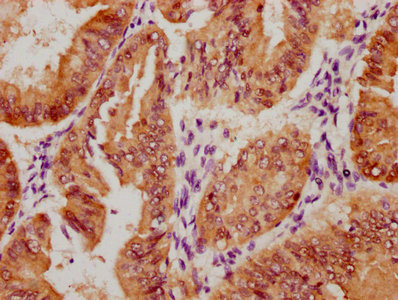
Phospho-YAP1 (S127) Recombinant Monoclonal Antibody
Applications: ELISA, WB, IHC
Species Reactivity: Human
-
-
-
-
-