Recombinant Human Solute carrier family 13 member 5 (SLC13A5), partial
-
中文名稱:人SLC13A5重組蛋白
-
貨號:CSB-YP768239HU
-
規格:
-
來源:Yeast
-
其他:
-
中文名稱:人SLC13A5重組蛋白
-
貨號:CSB-EP768239HU
-
規格:
-
來源:E.coli
-
其他:
-
中文名稱:人SLC13A5重組蛋白
-
貨號:CSB-EP768239HU-B
-
規格:
-
來源:E.coli
-
共軛:Avi-tag Biotinylated
E. coli biotin ligase (BirA) is highly specific in covalently attaching biotin to the 15 amino acid AviTag peptide. This recombinant protein was biotinylated in vivo by AviTag-BirA technology, which method is BriA catalyzes amide linkage between the biotin and the specific lysine of the AviTag.
-
其他:
-
中文名稱:人SLC13A5重組蛋白
-
貨號:CSB-BP768239HU
-
規格:
-
來源:Baculovirus
-
其他:
-
中文名稱:人SLC13A5重組蛋白
-
貨號:CSB-MP768239HU
-
規格:
-
來源:Mammalian cell
-
其他:
產品詳情
-
純度:>85% (SDS-PAGE)
-
基因名:
-
Uniprot No.:
-
別名:Na(+)/citrate cotransporter; NaC2/NaCT; NaCT; Novel solute carrier family 13 (sodium dependent dicarboxylate transporter) (Slc13a2 or 3) member; S13A5_HUMAN; Slc13a5; Sodium coupled citrate transporter; Sodium-coupled citrate transporter; Sodium-dependent citrate transporter; Solute carrier family 13 (sodium dependent citrate transporter); member 5; Solute carrier family 13 member 5
-
種屬:Homo sapiens (Human)
-
蛋白長度:Partial
-
蛋白標簽:Tag?type?will?be?determined?during?the?manufacturing?process.
The tag type will be determined during production process. If you have specified tag type, please tell us and we will develop the specified tag preferentially. -
產品提供形式:Lyophilized powder
Note: We will preferentially ship the format that we have in stock, however, if you have any special requirement for the format, please remark your requirement when placing the order, we will prepare according to your demand. -
復溶:We recommend that this vial be briefly centrifuged prior to opening to bring the contents to the bottom. Please reconstitute protein in deionized sterile water to a concentration of 0.1-1.0 mg/mL.We recommend to add 5-50% of glycerol (final concentration) and aliquot for long-term storage at -20℃/-80℃. Our default final concentration of glycerol is 50%. Customers could use it as reference.
-
儲存條件:Store at -20°C/-80°C upon receipt, aliquoting is necessary for mutiple use. Avoid repeated freeze-thaw cycles.
-
保質期:The shelf life is related to many factors, storage state, buffer ingredients, storage temperature and the stability of the protein itself.
Generally, the shelf life of liquid form is 6 months at -20°C/-80°C. The shelf life of lyophilized form is 12 months at -20°C/-80°C. -
貨期:Delivery time may differ from different purchasing way or location, please kindly consult your local distributors for specific delivery time.Note: All of our proteins are default shipped with normal blue ice packs, if you request to ship with dry ice, please communicate with us in advance and extra fees will be charged.
-
注意事項:Repeated freezing and thawing is not recommended. Store working aliquots at 4°C for up to one week.
-
Datasheet :Please contact us to get it.
產品評價

相關產品
靶點詳情
-
功能:High-affinity sodium/citrate cotransporter that mediates citrate entry into cells. Transports citrate in a Na(+)-dependent manner, transport process is electrogenic and recognizes the trivalent form of citrate rather than the divalent form. Although citrate is its main substrate, other intermediates of the citric acid cycle, such as succinate, fumarate, malate, oxaloacetate and alpha-ketoglutarate can serve as substrates but with a much lower affinity compared to citrate. Shows a substrate sensitivity in the order of citrate > malate ~ alpha-ketoglutarate > succinate ~ fumarate > oxaloacetate ~ isocitrate. Shows substantial citrate transporter activity when sodium ions are replaced by either potassium or choline ions. Transport activity is potentiated by lithium ions in the presence of low concentrations of citrate but is inhibited by lithium ions in the presence of high concentrations of citrate. Involved in the regulation of citrate levels in the brain.
-
基因功能參考文獻:
- SLC13A5 is the second major gene associated with the clinical diagnosis of KTZS. PMID: 27600704
- Data suggest that SLC13A5 plays a role in progression/cell proliferation of human hepatocellular carcinoma cells; here, RNA interference using shRNA against SLC13A5 decreased tumor burden in treatment of hepatocarcinoma in a xenograft tumor model in nude mice. PMID: 28655760
- Data suggest that SLC13A5 plays a role in progression/proliferation of human hepatocellular carcinoma cells; RNA interference using shRNA against SLC13A5 decreased tumor burden in treatment of hepatocarcinoma in a xenograft tumor model in nude mice. [REVIEW] PMID: 28821606
- Study identified additional SLC13A5 mutations in patients with chronic epilepsy starting in the neonatal period, with the mutations producing inactive Na+/citrate transporters. PMID: 27261973
- Studies show that SLC13A5 is a transporter in the plasma membrane that mediates the uptake of citrate into cells. It is expressed in hepatocytes, neurons, and spermatozoa. Its loss-of-function mutations are associated with neonatal epilepsy in humans. This is a single-gene disease with epilepsy resulting solely from the inactivity of SLC13A5. [review] PMID: 28264506
- In infants presenting with therapy resistant seizures in the first days after birth, without a clear history of hypoxic-ischemic encephalopathy, but with Punctate White Matter Lesions on their neonatal MRI, a diagnosis of SCL13A5 related epileptic encephalopathy should be considered. PMID: 27913086
- Discovery and characterization of novel inhibitors of the sodium-coupled citrate transporter (NaCT or SLC13A5). PMID: 26620127
- Eight patients from four families with SLC13A5 mutation are described. They have neonatal epilepsy, tooth hypoplasia, and developmental delay. PMID: 26384929
- SLC13A5 is a novel target gene of PXR and may contribute to drug-induced steatosis and metabolic disorders in humans. PMID: 25628225
- Screening of 68 additional unrelated individuals with early-onset epileptic encephalopathy for SLC13A5 mutations led to identification of one additional subject with heterozygous mutations of SLC13A5 and a similar clinical presentation as index subjects PMID: 24995870
- Clinical trial of gene-disease association and gene-environment interaction. (HuGE Navigator) PMID: 20379614
- This paper describes the cloning and functional characterization of the human Na(+)-coupled citrate transporter (NaCT). PMID: 12445824
- mediates the utilization of extracellular citrate for fat synthesis in human liver cells, and that the process is stimulated by lithium PMID: 12826022
- Expression and function of NaCT in a cell line and in primary hepatocytes. PMID: 16973915
顯示更多
收起更多
-
相關疾病:Epileptic encephalopathy, early infantile, 25 (EIEE25)
-
亞細胞定位:Cell membrane; Multi-pass membrane protein.
-
蛋白家族:SLC13A/DASS transporter (TC 2.A.47) family, NADC subfamily
-
組織特異性:Expressed most predominantly in the liver, with moderate expression detectable in the brain and testis.
-
數據庫鏈接:
Most popular with customers
-
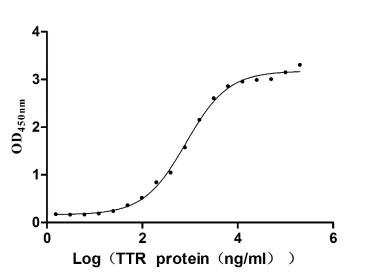
Recombinant Human Retinol-binding protein 4 (RBP4) (Active)
Express system: Mammalian cell
Species: Homo sapiens (Human)
-
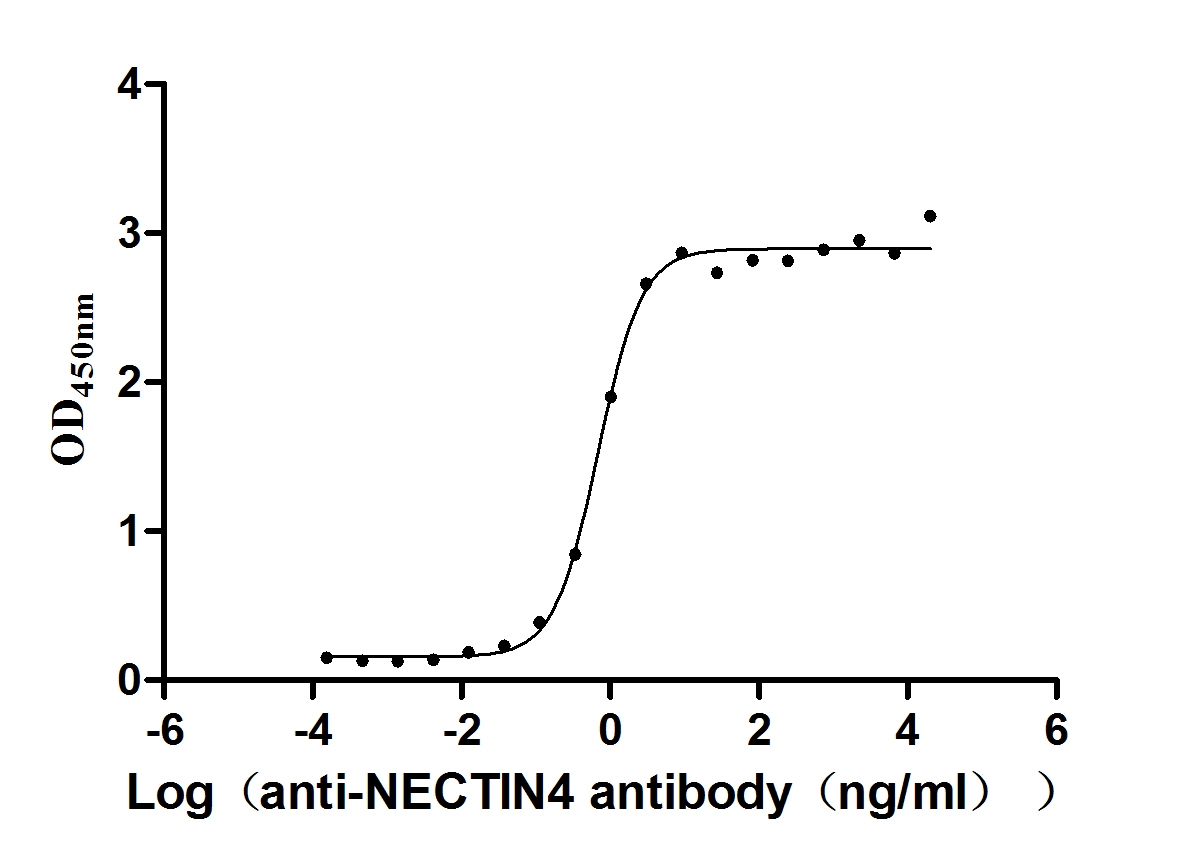
Recombinant Human Nectin-4 (NECTIN4), partial (Active)
Express system: Mammalian cell
Species: Homo sapiens (Human)
-

Recombinant Rat Intestinal-type alkaline phosphatase 1 (Alpi) (Active)
Express system: Mammalian cell
Species: Rattus norvegicus (Rat)
-
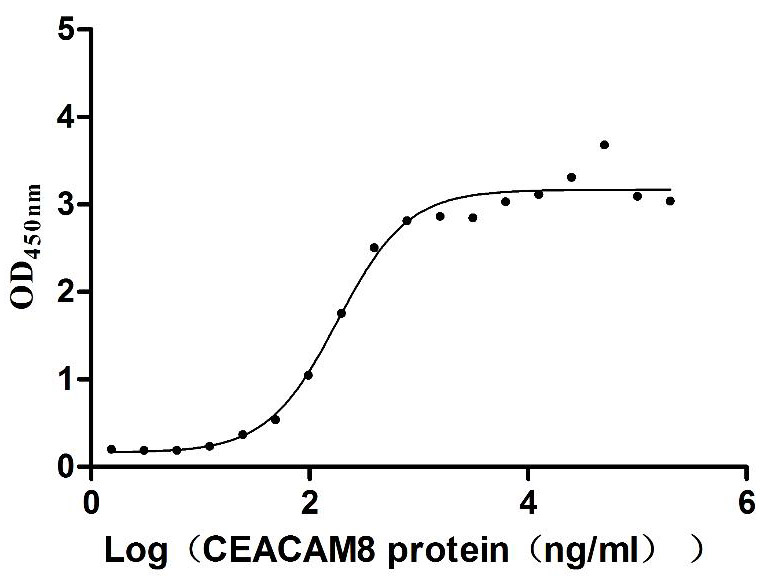
Recombinant Human Carcinoembryonic antigen-related cell adhesion molecule 6 (CEACAM6) (Active)
Express system: Mammalian cell
Species: Homo sapiens (Human)
-
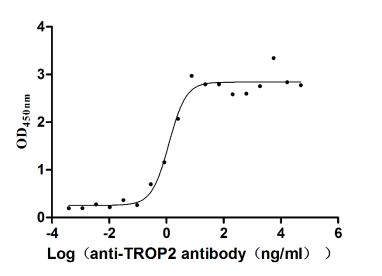
Recombinant Human Tumor-associated calcium signal transducer 2 (TACSTD2), partial (Active)
Express system: Mammalian cell
Species: Homo sapiens (Human)
-
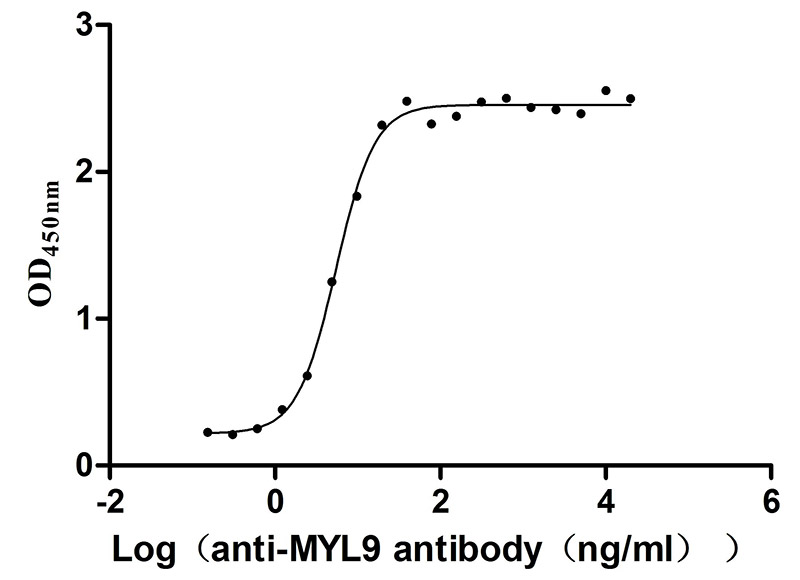
Recombinant Human Myosin regulatory light polypeptide 9 (MYL9) (Active)
Express system: Yeast
Species: Homo sapiens (Human)
-
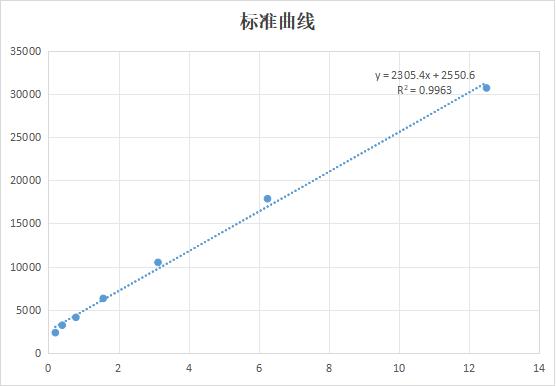
Recombinant Human Urokinase-type plasminogen activator(PLAU) (Active)
Express system: Mammalian cell
Species: Homo sapiens (Human)