Recombinant Rat Tumor protein p53-inducible nuclear protein 1 (Trp53inp1)
-
中文名稱:大鼠Trp53inp1重組蛋白
-
貨號:CSB-YP770495RA
-
規格:
-
來源:Yeast
-
其他:
-
中文名稱:大鼠Trp53inp1重組蛋白
-
貨號:CSB-EP770495RA
-
規格:
-
來源:E.coli
-
其他:
-
中文名稱:大鼠Trp53inp1重組蛋白
-
貨號:CSB-EP770495RA-B
-
規格:
-
來源:E.coli
-
共軛:Avi-tag Biotinylated
E. coli biotin ligase (BirA) is highly specific in covalently attaching biotin to the 15 amino acid AviTag peptide. This recombinant protein was biotinylated in vivo by AviTag-BirA technology, which method is BriA catalyzes amide linkage between the biotin and the specific lysine of the AviTag.
-
其他:
-
中文名稱:大鼠Trp53inp1重組蛋白
-
貨號:CSB-BP770495RA
-
規格:
-
來源:Baculovirus
-
其他:
-
中文名稱:大鼠Trp53inp1重組蛋白
-
貨號:CSB-MP770495RA
-
規格:
-
來源:Mammalian cell
-
其他:
產品詳情
-
純度:>85% (SDS-PAGE)
-
基因名:Trp53inp1
-
Uniprot No.:
-
別名:Trp53inp1; Sip; Tumor protein p53-inducible nuclear protein 1; Stress-induced protein; Thymus-expressed acidic protein; TEAP; p53-dependent damage-inducible nuclear protein 1; p53DINP1
-
種屬:Rattus norvegicus (Rat)
-
蛋白長度:full length protein
-
表達區域:1-239
-
氨基酸序列MFQRLNKMFV GEVTTSSSHE PEFSEKEDDE WILVDFIDTC TGFSAEEEEE DEDIGEESSA EHTSVFSCLP TSLECLADTS DSCFLQFESC PMEESWFITP PPCFTAGGLT TIKVETSPME NLLIEHPSMS VYAVHNSCPG LSEASCGNDD YNSSGPRMEA QSELGTHIHC CVAALAAQAT FLEQPKSFRP SQWIKGHSER QSLNRNGLRR QNLTRDCHTR QMKHRCWAVH QPCPRQYNY
-
蛋白標簽:Tag?type?will?be?determined?during?the?manufacturing?process.
The tag type will be determined during production process. If you have specified tag type, please tell us and we will develop the specified tag preferentially. -
產品提供形式:Lyophilized powder
Note: We will preferentially ship the format that we have in stock, however, if you have any special requirement for the format, please remark your requirement when placing the order, we will prepare according to your demand. -
復溶:We recommend that this vial be briefly centrifuged prior to opening to bring the contents to the bottom. Please reconstitute protein in deionized sterile water to a concentration of 0.1-1.0 mg/mL.We recommend to add 5-50% of glycerol (final concentration) and aliquot for long-term storage at -20℃/-80℃. Our default final concentration of glycerol is 50%. Customers could use it as reference.
-
儲存條件:Store at -20°C/-80°C upon receipt, aliquoting is necessary for mutiple use. Avoid repeated freeze-thaw cycles.
-
保質期:The shelf life is related to many factors, storage state, buffer ingredients, storage temperature and the stability of the protein itself.
Generally, the shelf life of liquid form is 6 months at -20°C/-80°C. The shelf life of lyophilized form is 12 months at -20°C/-80°C. -
貨期:Delivery time may differ from different purchasing way or location, please kindly consult your local distributors for specific delivery time.Note: All of our proteins are default shipped with normal blue ice packs, if you request to ship with dry ice, please communicate with us in advance and extra fees will be charged.
-
注意事項:Repeated freezing and thawing is not recommended. Store working aliquots at 4°C for up to one week.
-
Datasheet :Please contact us to get it.
產品評價

靶點詳情
-
功能:Antiproliferative and proapoptotic protein involved in cell stress response which acts as a dual regulator of transcription and autophagy. Acts as a positive regulator of autophagy. In response to cellular stress or activation of autophagy, relocates to autophagosomes where it interacts with autophagosome-associated proteins GABARAP, GABARAPL1/L2, MAP1LC3A/B/C and regulates autophagy. Acts as an antioxidant and plays a major role in p53/TP53-driven oxidative stress response. Possesses both a p53/TP53-independent intracellular reactive oxygen species (ROS) regulatory function and a p53/TP53-dependent transcription regulatory function. Positively regulates p53/TP53 and p73/TP73 and stimulates their capacity to induce apoptosis and regulate cell cycle. In response to double-strand DNA breaks, promotes p53/TP53 phosphorylation on 'Ser-46' and subsequent apoptosis. Acts as a tumor suppressor by inducing cell death by an autophagy and caspase-dependent mechanism. Can reduce cell migration by regulating the expression of SPARC.
-
基因功能參考文獻:
- Survival of pancreatic beta cells is partly controlled by a TCF7L2-p53-Tp53INP1-dependent pathway. PMID: 21965303
-
亞細胞定位:Cytoplasm, cytosol. Nucleus. Nucleus, PML body. Cytoplasmic vesicle, autophagosome.
-
組織特異性:Specifically expressed by acinar cells of chronic pancreatitis tissue.
-
數據庫鏈接:
Most popular with customers
-
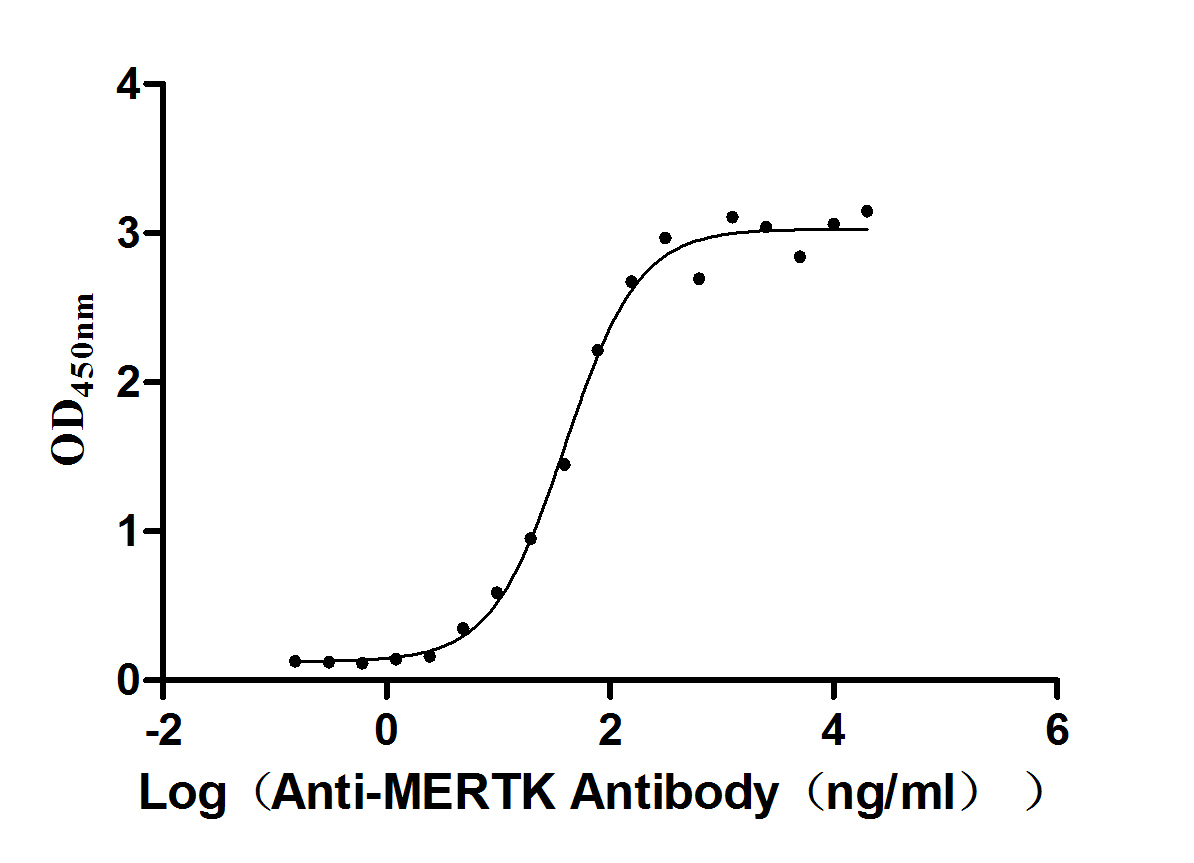
Recombinant Human Tyrosine-protein kinase Mer (MERTK), partial (Active)
Express system: Mammalian cell
Species: Homo sapiens (Human)
-
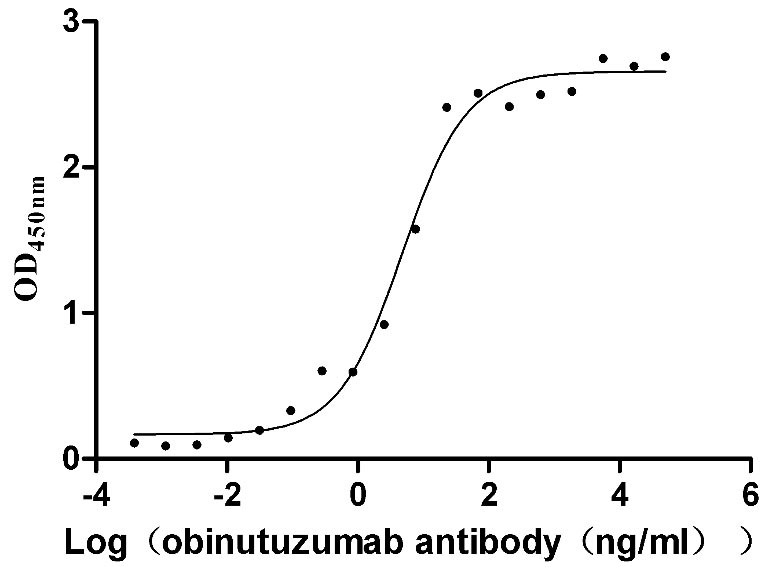
Recombinant Human B-lymphocyte antigen CD20 (MS4A1)-VLPs (Active)
Express system: Mammalian cell
Species: Homo sapiens (Human)
-
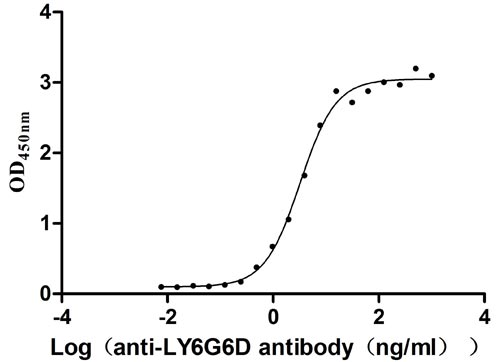
Recombinant Human Lymphocyte antigen 6 complex locus protein G6d (LY6G6D) (Active)
Express system: Yeast
Species: Homo sapiens (Human)
-
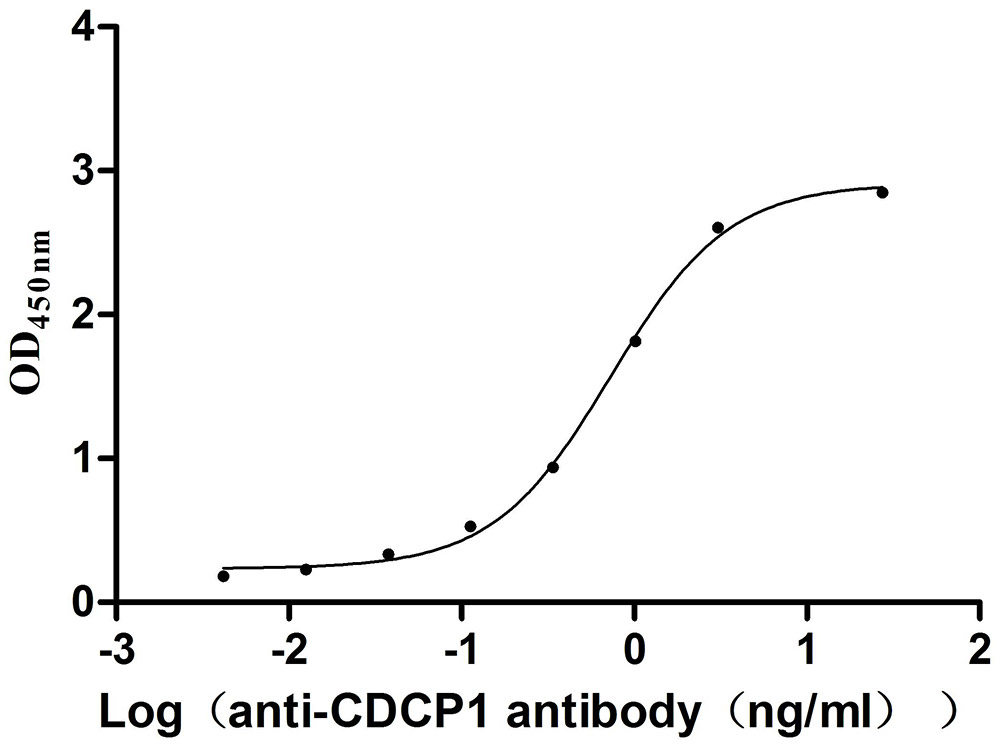
Recombinant Mouse CUB domain-containing protein 1 (Cdcp1), partial (Active)
Express system: Mammalian cell
Species: Mus musculus (Mouse)
-
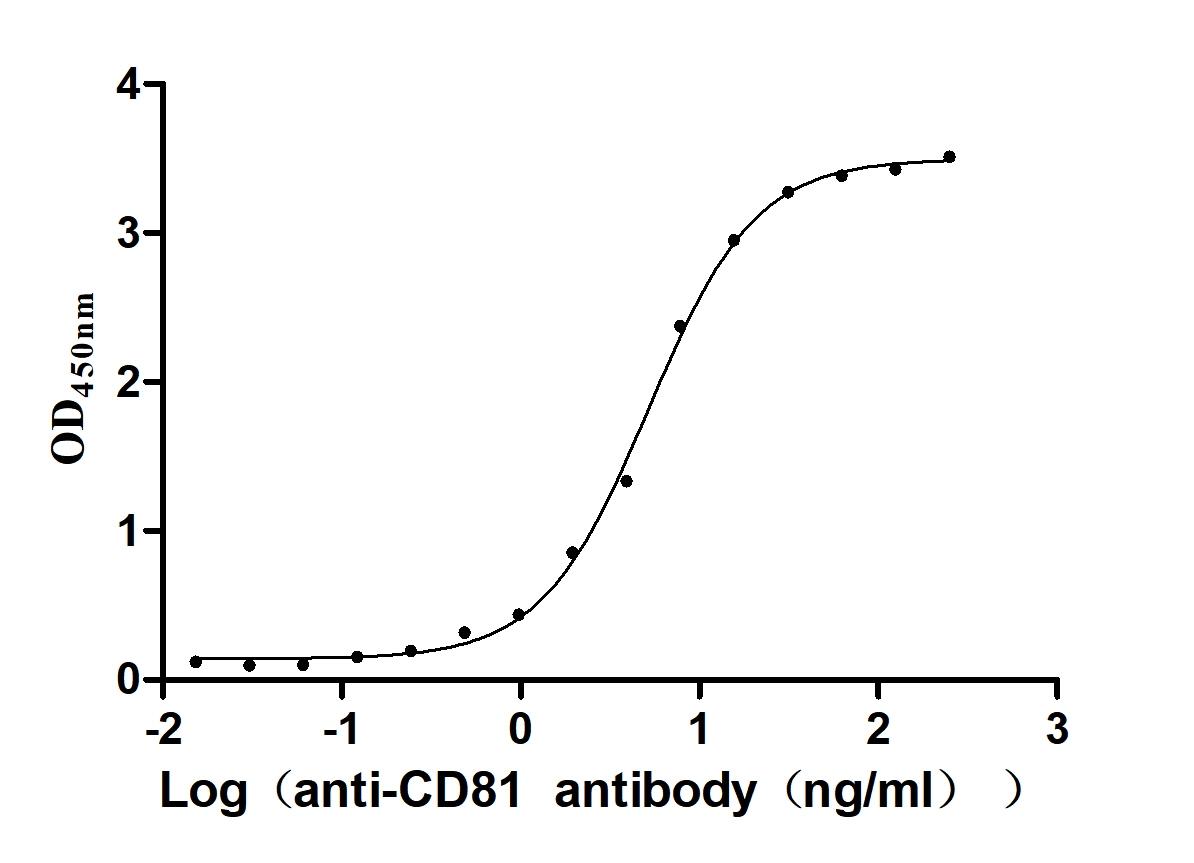
Recombinant Human CD81 antigen (CD81), partial (Active)
Express system: Mammalian cell
Species: Homo sapiens (Human)
-
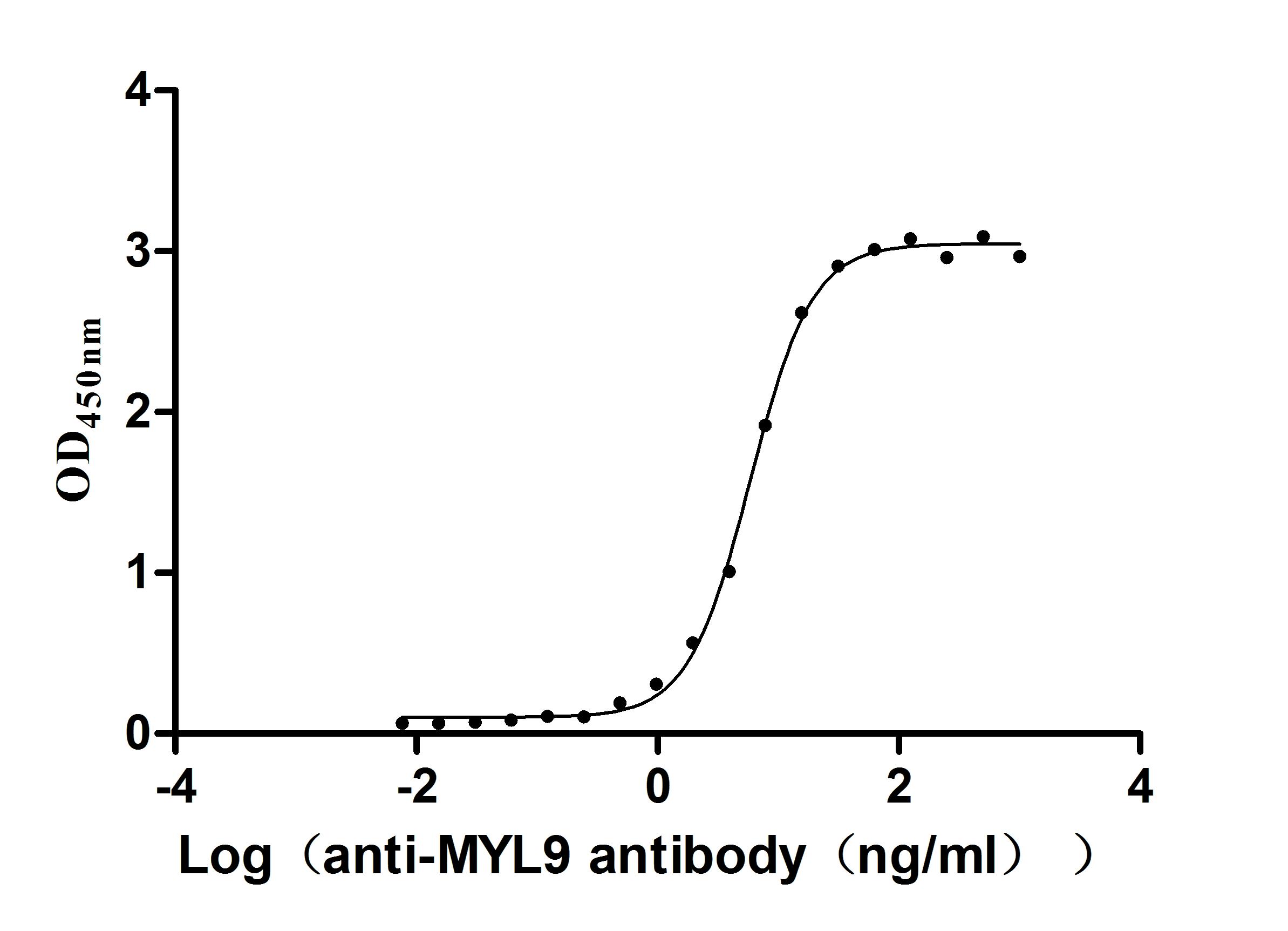
Recombinant Human Myosin regulatory light chain 12A (MYL12A) (Active)
Express system: E.coli
Species: Homo sapiens (Human)
-
-AC1.jpg)
Recombinant Human Tumor necrosis factor ligand superfamily member 15(TNFSF15) (Active)
Express system: Mammalian cell
Species: Homo sapiens (Human)