Recombinant Mouse Suppressor of cytokine signaling 7 (Socs7)
-
中文名稱:小鼠Socs7重組蛋白
-
貨號:CSB-YP022396MO
-
規格:
-
來源:Yeast
-
其他:
-
中文名稱:小鼠Socs7重組蛋白
-
貨號:CSB-EP022396MO
-
規格:
-
來源:E.coli
-
其他:
-
中文名稱:小鼠Socs7重組蛋白
-
貨號:CSB-EP022396MO-B
-
規格:
-
來源:E.coli
-
共軛:Avi-tag Biotinylated
E. coli biotin ligase (BirA) is highly specific in covalently attaching biotin to the 15 amino acid AviTag peptide. This recombinant protein was biotinylated in vivo by AviTag-BirA technology, which method is BriA catalyzes amide linkage between the biotin and the specific lysine of the AviTag.
-
其他:
-
中文名稱:小鼠Socs7重組蛋白
-
貨號:CSB-BP022396MO
-
規格:
-
來源:Baculovirus
-
其他:
-
中文名稱:小鼠Socs7重組蛋白
-
貨號:CSB-MP022396MO
-
規格:
-
來源:Mammalian cell
-
其他:
產品詳情
-
純度:>85% (SDS-PAGE)
-
基因名:
-
Uniprot No.:
-
別名:Socs7; Cish7; Nap4Suppressor of cytokine signaling 7; SOCS-7
-
種屬:Mus musculus (Mouse)
-
蛋白長度:full length protein
-
表達區域:1-579
-
氨基酸序列MVFRNVGRPP EEEDAEAARE PGPSELLCPR HRCALDPKAL PPGLALERTW GPVAGLEAQL AALGLGQPAG PGIKTAGGGC CPCPCPPQPP PPQPPPPAAA PQAGEDPTET SDALLVLEGL ESEAESLETN SCSEEELSSP GRGGGGVGGR LLLQPPGPEL PPVPFPLQDL VPPGRLSRGE QQQQQPPPPP PPPGPLRPLA GPSRKGSFKI RLSRLFRTKS CNGGSGGGDG TGKRPSGDLA ASAASLTDMG GSAVRELDTG RKPRLTRTQS AFSPVSFSPL FTGETVSLVD VDISQRGLTS PHPPTPPPPP RRSLSLLDDI SGTLPTSVLV APMGSSLQSF PLPPPPPPHA PDAFPRIAPI RASESLHSQP PQHLQCPLYR PDSSSFAASL RELEKCGWYW GPMNWEDAEM KLKGKPDGSF LVRDSSDPRY ILSLSFRSQG ITHHTRMEHY RGTFSLWCHP KFEDRCQSVV EFIKRAIMHS KNGKFLYFLR SRVPGLPPTP VQLLYPVSRF SNVKSLQHLC RFRIRQLVRI DHIPDLPLPK PLISYIRKFY YYDPQEEVYL SLKEAQLISK QKQEVEPST
-
蛋白標簽:Tag?type?will?be?determined?during?the?manufacturing?process.
The tag type will be determined during production process. If you have specified tag type, please tell us and we will develop the specified tag preferentially. -
產品提供形式:Lyophilized powder
Note: We will preferentially ship the format that we have in stock, however, if you have any special requirement for the format, please remark your requirement when placing the order, we will prepare according to your demand. -
復溶:We recommend that this vial be briefly centrifuged prior to opening to bring the contents to the bottom. Please reconstitute protein in deionized sterile water to a concentration of 0.1-1.0 mg/mL.We recommend to add 5-50% of glycerol (final concentration) and aliquot for long-term storage at -20℃/-80℃. Our default final concentration of glycerol is 50%. Customers could use it as reference.
-
儲存條件:Store at -20°C/-80°C upon receipt, aliquoting is necessary for mutiple use. Avoid repeated freeze-thaw cycles.
-
保質期:The shelf life is related to many factors, storage state, buffer ingredients, storage temperature and the stability of the protein itself.
Generally, the shelf life of liquid form is 6 months at -20°C/-80°C. The shelf life of lyophilized form is 12 months at -20°C/-80°C. -
貨期:Delivery time may differ from different purchasing way or location, please kindly consult your local distributors for specific delivery time.Note: All of our proteins are default shipped with normal blue ice packs, if you request to ship with dry ice, please communicate with us in advance and extra fees will be charged.
-
注意事項:Repeated freezing and thawing is not recommended. Store working aliquots at 4°C for up to one week.
-
Datasheet :Please contact us to get it.
產品評價

靶點詳情
-
功能:Regulates signaling cascades probably through protein ubiquitination and/or sequestration. Functions in insulin signaling and glucose homeostasis through IRS1 ubiquitination and subsequent proteasomal degradation. Inhibits also prolactin, growth hormone and leptin signaling by preventing STAT3 and STAT5 activation, sequestering them in the cytoplasm and reducing their binding to DNA. May be a substrate recognition component of a SCF-like E3 ubiquitin-protein ligase complex which mediates the ubiquitination and subsequent proteasomal degradation of target proteins.
-
基因功能參考文獻:
- Results suggest: 1) SOCS6 and SOCS7 bind tyrosine-phosphorylated DAB1 and commit it to ubiquitination and proteasomal degradation. 2) Removal of phosphorylated DAB1 by SOCS6 and SOCS7 terminates reelin signaling and allows a new cycle of reelin signaling to commence. 3) Repeated cycles of reelin signaling "ON" and "OFF" drive the fundamentally cyclic process of cell migration in the cortex. PMID: 26503265
- SOCS-6 binds to insulin receptor substrate 4, and mice lacking the SOCS-6 gene exhibit mild growth retardation(SOCS-6) PMID: 12052866
- prominent expression of Socs7 in the brain suggests an important functional role of SOCS7 in this organ PMID: 15494444
- data suggest that SOCS7 is a potent regulator of glucose homeostasis and insulin signaling PMID: 16127460
- Data implicate SOCS7 in the modulation of allergic inflammation and demonstrate that SOCS7 is involved in the regulation of TSLP signaling in mast cells. PMID: 19427817
顯示更多
收起更多
-
亞細胞定位:Cytoplasm. Cell membrane; Peripheral membrane protein; Cytoplasmic side. Nucleus.
-
組織特異性:Widely expressed with higher expression in brain and testis where it is expressed by spermatocytes and early spermatids. Also significantly expressed in spleen, skeletal muscle and kidney.
-
數據庫鏈接:
Most popular with customers
-
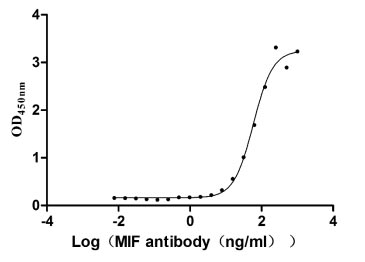
Recombinant Human Macrophage migration inhibitory factor (MIF) (Active)
Express system: Mammalian cell
Species: Homo sapiens (Human)
-
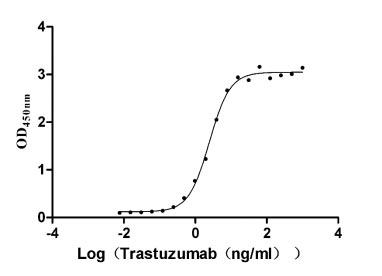
Recombinant Human Receptor tyrosine-protein kinase erbB-2 (ERBB2), partial (Active)
Express system: Mammalian cell
Species: Homo sapiens (Human)
-
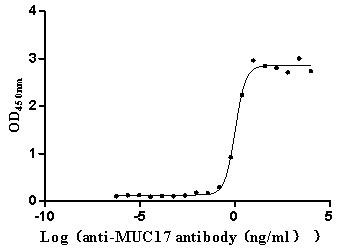
Recombinant Human Mucin-17 (MUC17), partial (Active)
Express system: Mammalian cell
Species: Homo sapiens (Human)
-
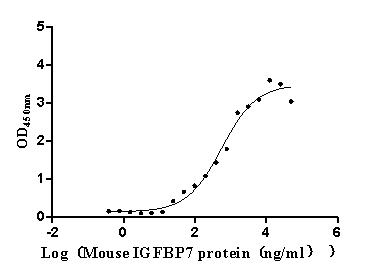
Recombinant Mouse Complement component C1q receptor (Cd93), partial (Active)
Express system: Mammalian cell
Species: Mus musculus (Mouse)
-
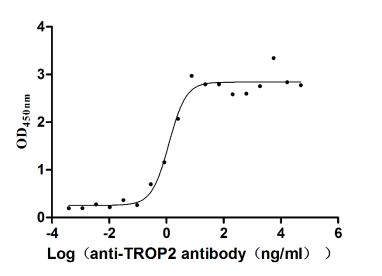
Recombinant Human Tumor-associated calcium signal transducer 2 (TACSTD2), partial (Active)
Express system: Mammalian cell
Species: Homo sapiens (Human)