Recombinant Mouse CCR4-NOT transcription complex subunit 3 (Cnot3)
-
中文名稱:Recombinant Mouse CCR4-NOT transcription complex subunit 3(Cnot3)
-
貨號:CSB-YP816970MO
-
規格:
-
來源:Yeast
-
其他:
-
中文名稱:Recombinant Mouse CCR4-NOT transcription complex subunit 3(Cnot3)
-
貨號:CSB-EP816970MO
-
規格:
-
來源:E.coli
-
其他:
-
中文名稱:Recombinant Mouse CCR4-NOT transcription complex subunit 3(Cnot3)
-
貨號:CSB-EP816970MO-B
-
規格:
-
來源:E.coli
-
共軛:Avi-tag Biotinylated
E. coli biotin ligase (BirA) is highly specific in covalently attaching biotin to the 15 amino acid AviTag peptide. This recombinant protein was biotinylated in vivo by AviTag-BirA technology, which method is BriA catalyzes amide linkage between the biotin and the specific lysine of the AviTag.
-
其他:
-
中文名稱:Recombinant Mouse CCR4-NOT transcription complex subunit 3(Cnot3)
-
貨號:CSB-BP816970MO
-
規格:
-
來源:Baculovirus
-
其他:
-
中文名稱:Recombinant Mouse CCR4-NOT transcription complex subunit 3(Cnot3)
-
貨號:CSB-MP816970MO
-
規格:
-
來源:Mammalian cell
-
其他:
產品詳情
-
純度:>85% (SDS-PAGE)
-
基因名:Cnot3
-
Uniprot No.:
-
別名:Cnot3; Not3CCR4-NOT transcription complex subunit 3; CCR4-associated factor 3
-
種屬:Mus musculus (Mouse)
-
蛋白長度:full length protein
-
表達區域:1-751
-
氨基酸序列MADKRKLQGE IDRCLKKVSE GVEQFEDIWQ KLHNAANANQ KEKYEADLKK EIKKLQRLRD QIKTWVASNE IKDKRQLIEN RKLIETQMER FKVVERETKT KAYSKEGLGL AQKVDPAQKE KEEVGQWLTN TIDTLNMQVD QFESEVESLS VQTRKKKGDK DKQDRIEGLK RHIEKHRYHV RMLETILRML DNDSILVDAI RKIKDDVEYY VDSSQDPDFE ENEFLYDDLD LEDIPQALVA TSPPSHSHME DEIFNQSSST PTSTTSSSPI PPSPANCTTE NSEDDKKRGR STDSEVSQSP AKNGSKPVHS NQHPQSPAVP PTYPSGPPPT TSALSSTPGN NGASTPAAPT SALGPKASPA PSHNSGTPAP YAQAVAPPNA SGPSNAQPRP PSAQPSGGSG GGSGGSSSNS NSGTGGGAGK QNGATSYSSV VADSPAEVTL SSSGGSSASS QALGPTSGPH NPAPSTSKES STAAPSGAGN VASGSGNNSG GPSLLVPLPV NPPSSPTPSF SEAKAAGTLL NGPPQFSTTP EIKAPEPLSS LKSMAERAAI SSGIEDPVPT LHLTDRDIIL SSTSAPPTSS QPPLQLSEVN IPLSLGVCPL GPVSLTKEQL YQQAMEEAAW HHMPHPSDSE RIRQYLPRNP CPTPPYHHQM PPPHSDTVEF YQRLSTETLF FIFYYLEGTK AQYLAAKALK KQSWRFHTKY MMWFQRHEEP KTITDEFEQG TYIYFDYEKW GQRKKEGFTF EYRYLEDRDL Q
-
蛋白標簽:Tag?type?will?be?determined?during?the?manufacturing?process.
The tag type will be determined during production process. If you have specified tag type, please tell us and we will develop the specified tag preferentially. -
產品提供形式:Lyophilized powder
Note: We will preferentially ship the format that we have in stock, however, if you have any special requirement for the format, please remark your requirement when placing the order, we will prepare according to your demand. -
復溶:We recommend that this vial be briefly centrifuged prior to opening to bring the contents to the bottom. Please reconstitute protein in deionized sterile water to a concentration of 0.1-1.0 mg/mL.We recommend to add 5-50% of glycerol (final concentration) and aliquot for long-term storage at -20℃/-80℃. Our default final concentration of glycerol is 50%. Customers could use it as reference.
-
儲存條件:Store at -20°C/-80°C upon receipt, aliquoting is necessary for mutiple use. Avoid repeated freeze-thaw cycles.
-
保質期:The shelf life is related to many factors, storage state, buffer ingredients, storage temperature and the stability of the protein itself.
Generally, the shelf life of liquid form is 6 months at -20°C/-80°C. The shelf life of lyophilized form is 12 months at -20°C/-80°C. -
貨期:Delivery time may differ from different purchasing way or location, please kindly consult your local distributors for specific delivery time.Note: All of our proteins are default shipped with normal blue ice packs, if you request to ship with dry ice, please communicate with us in advance and extra fees will be charged.
-
注意事項:Repeated freezing and thawing is not recommended. Store working aliquots at 4°C for up to one week.
-
Datasheet :Please contact us to get it.
產品評價

靶點詳情
-
功能:Component of the CCR4-NOT complex which is one of the major cellular mRNA deadenylases and is linked to various cellular processes including bulk mRNA degradation, miRNA-mediated repression, translational repression during translational initiation and general transcription regulation. Additional complex functions may be a consequence of its influence on mRNA expression. May be involved in metabolic regulation; may be involved in recruitment of the CCR4-NOT complex to deadenylation target mRNAs involved in energy metabolism. Involved in mitotic progression and regulation of the spindle assembly checkpoint by regulating the stability of MAD1L1 mRNA. Can repress transcription and may link the CCR4-NOT complex to transcriptional regulation; the repressive function may involve histone deacetylases. Involved in the maintenance of embryonic stem (ES) cell identity; prevents their differentiation towards extraembryonic trophectoderm lineages.
-
基因功能參考文獻:
- we propose that CNOT3 maintains the pluripotent state by promoting differentiation gene mRNA deadenylation and degradation, and we identify poly(A) tail-length regulation as a post-transcriptional mechanism that controls pluripotency. PMID: 27746116
- Cnot3(ad-/-) mice exhibit lipodystrophy. PMID: 28032897
- increases the number of ALP-positive colonies after iPSC induction and decreases expression levels of Eomes and p21 mRNAs. Based on these observations, we propose that the CCR4-NOT deadenylase activity contributes to iPSC induction. PMID: 27037025
- CNOT3 suppression promotes necroptosis by stabilizing mRNAs for cell death-inducing proteins, Ripk1 and Ripk3. PMID: 26437789
- data suggest that the CCR4-NOT complex regulates B cell differentiation by controlling Igh rearrangement and destabilizing p53 mRNA. PMID: 26238124
- CNOT3 is a critical regulator of bone mass acting on bone resorption through posttranscriptional down-regulation of RANK mRNA stability, at least in part, even in aging-induced osteoporosis. PMID: 24550297
- CNOT3 responds to feeding conditions to regulate deadenylation-specific mRNAs and energy metabolism PMID: 21897366
顯示更多
收起更多
-
亞細胞定位:Nucleus. Cytoplasm, P-body. Note=NANOS2 promotes its localization to P-body.
-
蛋白家族:CNOT2/3/5 family
-
數據庫鏈接:
Most popular with customers
-
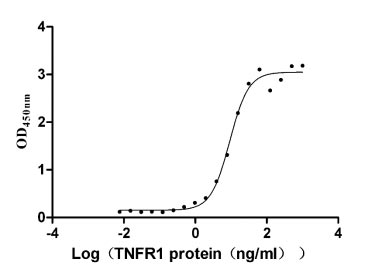
Recombinant Human Tumor necrosis factor receptor superfamily member 1A (TNFRSF1A), partial (Active)
Express system: Mammalian cell
Species: Homo sapiens (Human)
-
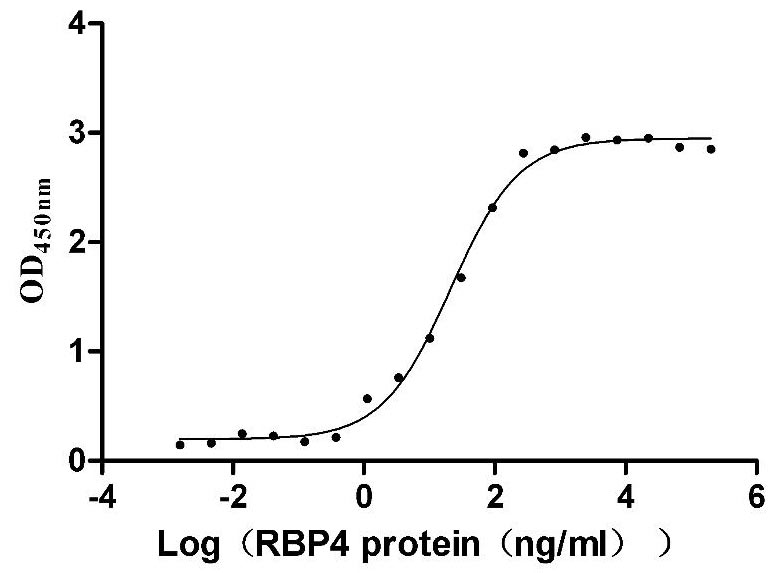
Recombinant Mouse Transthyretin (Ttr) (Active)
Express system: Mammalian cell
Species: Mus musculus (Mouse)
-
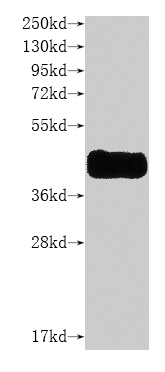
Recombinant Human C-C chemokine receptor type 8 (CCR8)-VLPs (Active)
Express system: Mammalian cell
Species: Homo sapiens (Human)
-
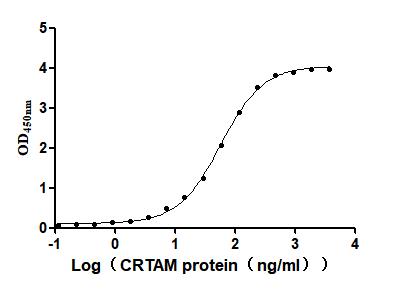
Recombinant Mouse Cytotoxic and regulatory T-cell molecule (Crtam), partial (Active)
Express system: Mammalian cell
Species: Mus musculus (Mouse)
-
-AC1.jpg)
Recombinant Human Tumor necrosis factor ligand superfamily member 15(TNFSF15) (Active)
Express system: Mammalian cell
Species: Homo sapiens (Human)
-
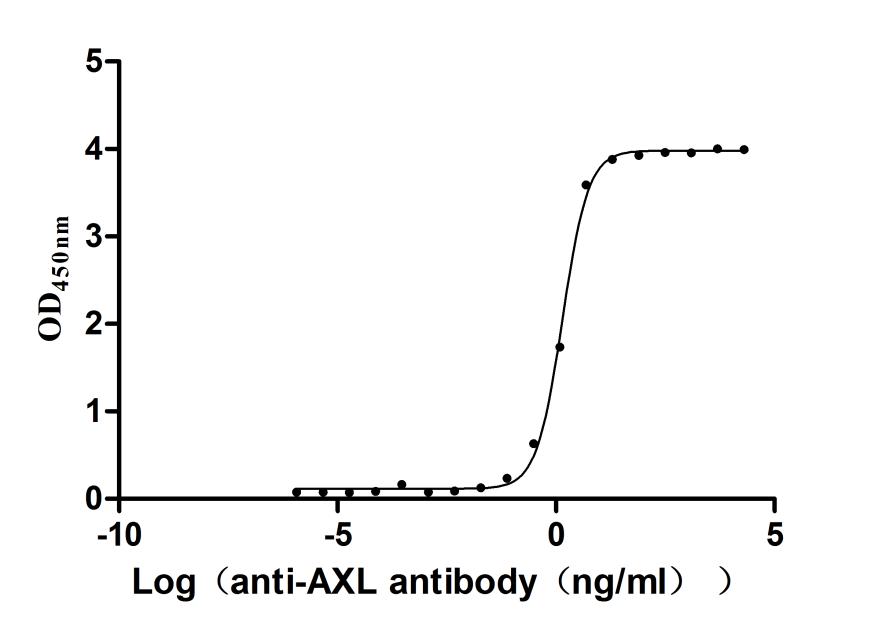
Recombinant Human Tyrosine-protein kinase receptor UFO(AXL),partial (Active)
Express system: Mammalian cell
Species: Homo sapiens (Human)