Recombinant Human Sulfite oxidase, mitochondrial (SUOX)
-
中文名稱:人SUOX重組蛋白
-
貨號(hào):CSB-BP022954HU
-
規(guī)格:
-
來源:Baculovirus
-
其他:
-
中文名稱:人SUOX重組蛋白
-
貨號(hào):CSB-EP022954HU-B
-
規(guī)格:
-
來源:E.coli
-
共軛:Avi-tag Biotinylated
E. coli biotin ligase (BirA) is highly specific in covalently attaching biotin to the 15 amino acid AviTag peptide. This recombinant protein was biotinylated in vivo by AviTag-BirA technology, which method is BriA catalyzes amide linkage between the biotin and the specific lysine of the AviTag.
-
其他:
-
中文名稱:人SUOX重組蛋白
-
貨號(hào):CSB-MP022954HU
-
規(guī)格:
-
來源:Mammalian cell
-
其他:
產(chǎn)品詳情
-
純度:Greater than 85% as determined by SDS-PAGE.
-
基因名:SUOX
-
Uniprot No.:
-
別名:EC 1.8.3.1; mitochondrial; Sulfite oxidase; Sulfite oxidase mitochondrial ; Sulfite oxidase; mitochondrial precursor; Suox; SUOX_HUMAN
-
種屬:Homo sapiens (Human)
-
蛋白長度:Full Length of Mature Protein
-
表達(dá)區(qū)域:80-545aa
-
氨基酸序列ESTHIYTKEEVSSHTSPETGIWVTLGSEVFDVTEFVDLHPGGPSKLMLAAGGPLEPFWALYAVHNQSHVRELLAQYKIGELNPEDKVAPTVETSDPYADDPVRHPALKVNSQRPFNAEPPPELLTENYITPNPIFFTRNHLPVPNLDPDTYRLHVVGAPGGQSLSLSLDDLHNFPRYEITVTLQCAGNRRSEMTQVKEVKGLEWRTGAISTARWAGARLCDVLAQAGHQLCETEAHVCFEGLDSDPTGTAYGASIPLARAMDPEAEVLLAYEMNGQPLPRDHGFPVRVVVPGVVGARHVKWLGRVSVQPEESYSHWQRRDYKGFSPSVDWETVDFDSAPSIQELPVQSAITEPRDGETVESGEVTIKGYAWSGGGRAVIRVDVSLDGGLTWQVAKLDGEEQRPRKAWAWRLWQLKAPVPAGQKELNIVCKAVDDGYNVQPDTVAPIWNLRGVLSNAWHRVHVYVSP
-
蛋白標(biāo)簽:Tag?type?will?be?determined?during?the?manufacturing?process.
The tag type will be determined during production process. If you have specified tag type, please tell us and we will develop the specified tag preferentially. -
產(chǎn)品提供形式:Lyophilized powder
Note: We will preferentially ship the format that we have in stock, however, if you have any special requirement for the format, please remark your requirement when placing the order, we will prepare according to your demand. -
復(fù)溶:We recommend that this vial be briefly centrifuged prior to opening to bring the contents to the bottom. Please reconstitute protein in deionized sterile water to a concentration of 0.1-1.0 mg/mL.We recommend to add 5-50% of glycerol (final concentration) and aliquot for long-term storage at -20℃/-80℃. Our default final concentration of glycerol is 50%. Customers could use it as reference.
-
儲(chǔ)存條件:Store at -20°C/-80°C upon receipt, aliquoting is necessary for mutiple use. Avoid repeated freeze-thaw cycles.
-
保質(zhì)期:The shelf life is related to many factors, storage state, buffer ingredients, storage temperature and the stability of the protein itself.
Generally, the shelf life of liquid form is 6 months at -20°C/-80°C. The shelf life of lyophilized form is 12 months at -20°C/-80°C. -
貨期:Delivery time may differ from different purchasing way or location, please kindly consult your local distributors for specific delivery time.Note: All of our proteins are default shipped with normal blue ice packs, if you request to ship with dry ice, please communicate with us in advance and extra fees will be charged.
-
注意事項(xiàng):Repeated freezing and thawing is not recommended. Store working aliquots at 4°C for up to one week.
-
Datasheet :Please contact us to get it.
產(chǎn)品評(píng)價(jià)

相關(guān)產(chǎn)品
靶點(diǎn)詳情
-
基因功能參考文獻(xiàn):
- SUOX is negatively associated with the progression and proliferation of oral squamous cell carcinoma. PMID: 29280012
- This is the first description of the prenatal neurodevelopment of brain disruption in isolated sulfite oxidase deficiency. PMID: 28629418
- Novel SUOX mutations were detected in 3 Sulfite oxidase deficiency cases PMID: 27289259
- Nitrite binds and reduces at the molybdenum site of mammalian sulfite oxidase, which may be allosterically regulated by heme and molybdenum domain interactions, and contributes to the mammalian nitrate-nitrite-NO signaling pathway in human fibroblasts. PMID: 25314640
- This finding suggests the possibility to use oxygen-reactive SO variants in sulfite detoxification, as the loss of SO activity is causing severe neurodegeneration PMID: 26171830
- Several mutants of H304 and R309 of SUOX were investigated by steady-state kinetics, laser flash photolysis studies of intramolecular electron transfer (IET), and spectroelectrochemistry. PMID: 24968320
- SUOX was decreased and AKR1B10 and CD34 were increased with the stepwise progression of hepatocarcinogenesis. PMID: 23665285
- combined genetic association studies in women from China/Netherlands/United States: Data suggest that an SNP in SUOX locus (rs705702) and SNPs in other proteins are associated with polycystic ovary syndrome across ethnic differences. [META-ANALYSIS] PMID: 24106282
- effect of mutation of surface residues on the heme domain on intramolecular electron transfer, and steady-state kinetics PMID: 22975842
- In this study a human sulfite oxidase variant, in which the active site has been modified to alter substrate specificity and activity from sulfite oxidation to nitrate reduction, is compared to chicken sulfite oxidase. PMID: 22263579
- prepared and purified samples of the wild type and various mutants of human SO that are depleted of chloride. These samples do not exhibit the typical lpH EPR spectrum at low pH but rather exhibit spectra that are characteristic of the blocked species PMID: 20491442
- Experimental deletions of nonconserved amino acids in the 14-residue interdomain polypeptide tether of sulfite oxidase shorten its length and result in more drastically reduced intramolecular electron transfer rate constants. PMID: 20063894
- role of conserved tyrosine 343 in intramolecular electron transfer in this enzyme PMID: 12424234
- Sulfite oxidase gene expression in brain and in other tissues. PMID: 12763039
- comparison of this structure with other b(5)-type cytochromes reveals distinct structural features present in the sulfite oxidase b(5) domain which promote optimal electron transport between the Moco of sulfite oxidase and the heme of cytochrome c PMID: 12832761
- To further assess the role of Arg 160 in human SO, intramolecular electron transfer rates between the reduced heme and oxidized molybdenum centers in the wild type, R160Q, and R160K human SO forms were investigated by laser flash photolysis PMID: 14567685
- the Tyr(343) residue is important for both substrate binding and oxidation of sulfite by sulfite oxidase PMID: 14729666
- mutation in SUOX gene in sulfite oxidase deficiency PMID: 16140720
- mutations to charged residues at the equivalent sites most likely cause crucial global or localized structural changes, and expose an alternative docking site that may compete with the Mo domain for docking of the heme PMID: 16229463
- Analysis of recombinant G473D sulfite oxidase indicated that it is severely impaired both in the ability to bind sulfite and in catalysis, with a second-order rate constant 5 orders of magnitude lower than that of the wild type. PMID: 16475804
- Magnetic resonance imaging and MR spectroscopy measurements may help differentiate isolated sulfite oxidase deficiency from hypoxic-ischemic condition in patients in whom this diagnosis is not clinically suspected. PMID: 17940249
- analysis of protein-protein interaction of sulfite oxidase and cytochrome c catalyzing oxidation of sulfite PMID: 18177044
- EPR study of the Mo(V) center of the pathogenic R160Q mutant confirms the presence of three distinct species whose relative abundances depend upon pH. PMID: 18529001
- the activity of molybdoenzymes, such as sulfite oxidase, is inhibited by high concentrations of heavy metals in the cell PMID: 18959753
顯示更多
收起更多
-
相關(guān)疾病:Isolated sulfite oxidase deficiency (ISOD)
-
亞細(xì)胞定位:Mitochondrion intermembrane space.
-
數(shù)據(jù)庫鏈接:
Most popular with customers
-
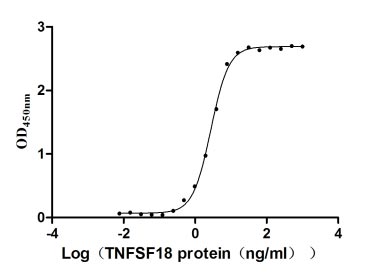
Recombinant Human Tumor necrosis factor ligand superfamily member 18 (TNFSF18), partial (Active)
Express system: Mammalian cell
Species: Homo sapiens (Human)
-
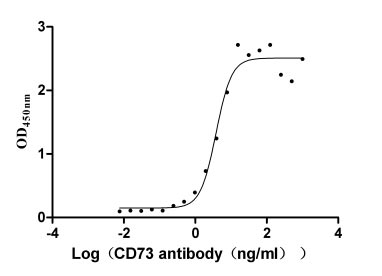
Recombinant Human 5'-nucleotidase (NT5E) (Active)
Express system: Mammalian cell
Species: Homo sapiens (Human)
-
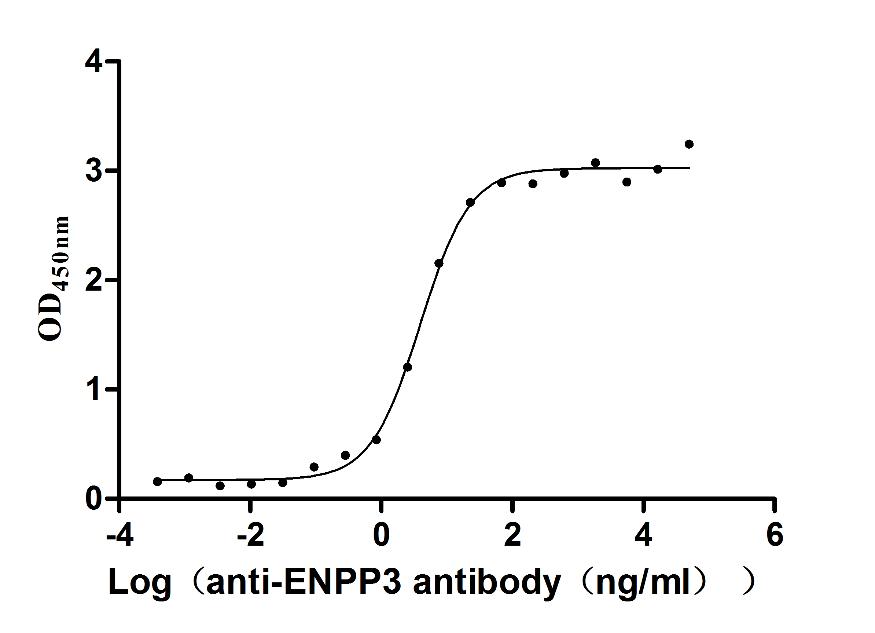
Express system: Mammalian cell
Species: Macaca fascicularis (Crab-eating macaque) (Cynomolgus monkey)
-
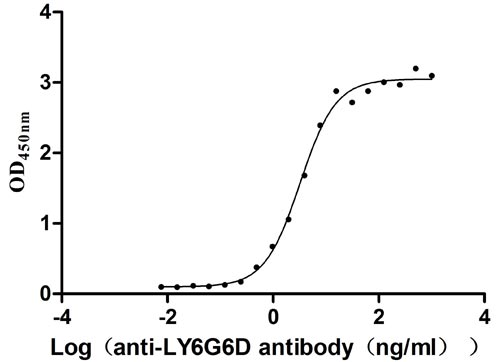
Recombinant Human Lymphocyte antigen 6 complex locus protein G6d (LY6G6D) (Active)
Express system: Yeast
Species: Homo sapiens (Human)
-
-AC1.jpg)
Recombinant Human Dickkopf-related protein 1 (DKK1) (Active)
Express system: Mammalian cell
Species: Homo sapiens (Human)
-
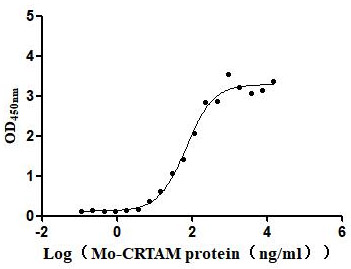
Recombinant Mouse Cell adhesion molecule 1 (Cadm1), partial (Active)
Express system: Mammalian cell
Species: Mus musculus (Mouse)
-
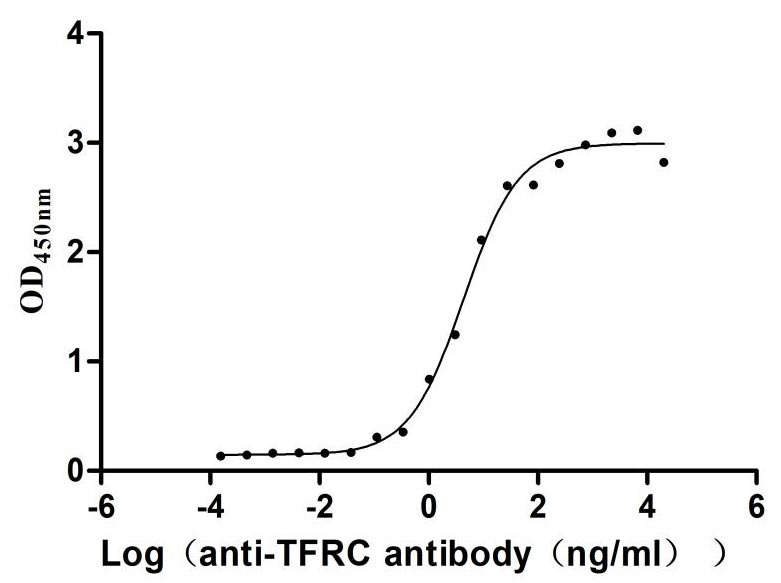
Recombinant Human Transferrin receptor protein 1 (TFRC), partial (Active)
Express system: Mammalian cell
Species: Homo sapiens (Human)
-
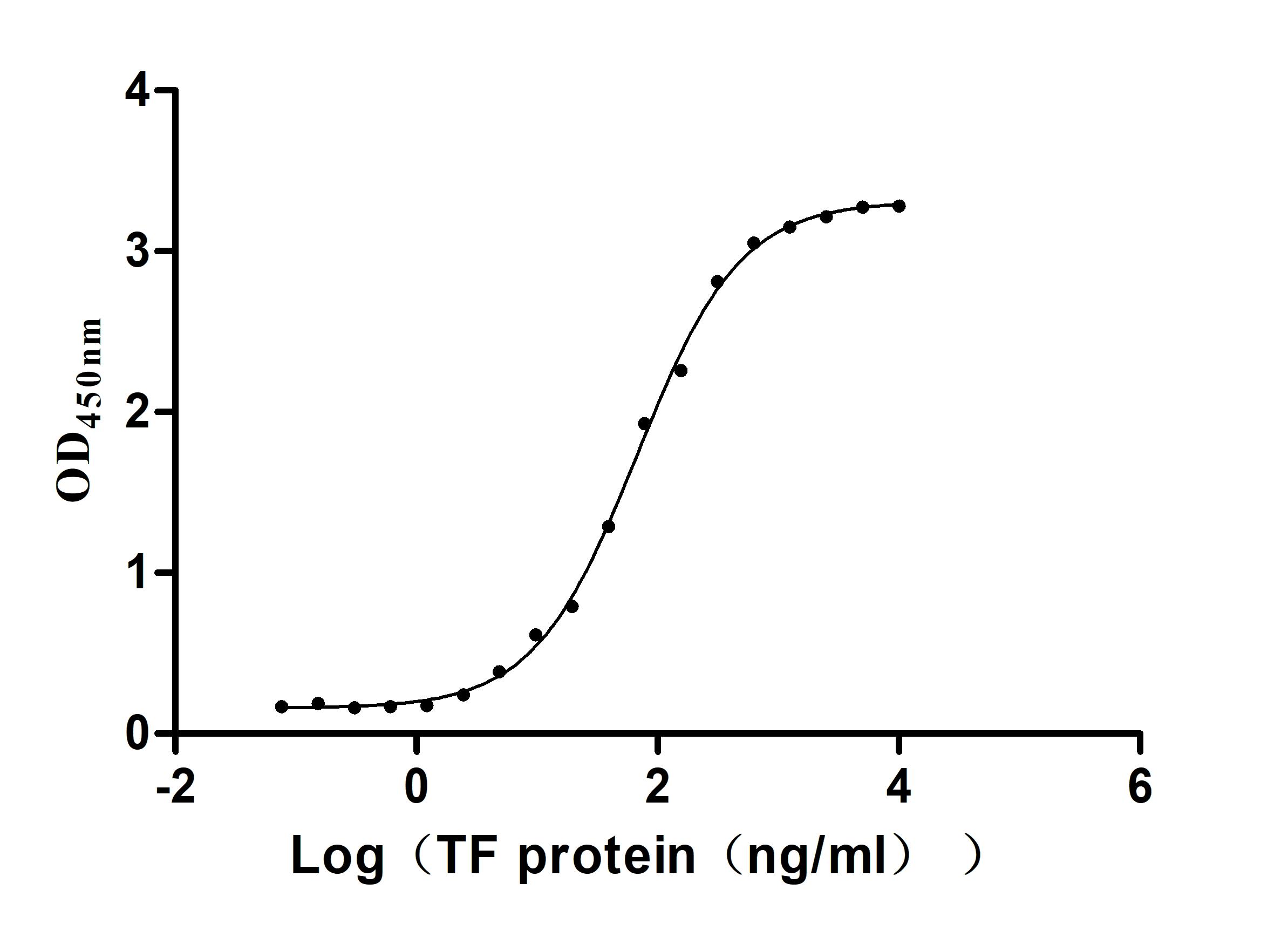
Recombinant Human Serotransferrin(TF) (Active)
Express system: Mammalian cell
Species: Homo sapiens (Human)