Recombinant Human R-spondin-3 (RSPO3)
-
中文名稱:人RSPO3重組蛋白
-
貨號:CSB-YP887154HU
-
規格:
-
來源:Yeast
-
其他:
-
中文名稱:人RSPO3重組蛋白
-
貨號:CSB-EP887154HU
-
規格:
-
來源:E.coli
-
其他:
-
中文名稱:人RSPO3重組蛋白
-
貨號:CSB-EP887154HU-B
-
規格:
-
來源:E.coli
-
共軛:Avi-tag Biotinylated
E. coli biotin ligase (BirA) is highly specific in covalently attaching biotin to the 15 amino acid AviTag peptide. This recombinant protein was biotinylated in vivo by AviTag-BirA technology, which method is BriA catalyzes amide linkage between the biotin and the specific lysine of the AviTag.
-
其他:
-
中文名稱:人RSPO3重組蛋白
-
貨號:CSB-BP887154HU
-
規格:
-
來源:Baculovirus
-
其他:
-
中文名稱:人RSPO3重組蛋白
-
貨號:CSB-MP887154HU
-
規格:
-
來源:Mammalian cell
-
其他:
產品詳情
-
純度:>85% (SDS-PAGE)
-
基因名:RSPO3
-
Uniprot No.:
-
別名:CRISTIN1; hPWTSR; hRspo3; Protein with TSP type-1 repeat; PWTSR; R-spondin 3 homolog; R-spondin-3 [Precursor]; R-spondin-3; Roof plate specific spondin-3; Roof plate-specific spondin-3; RSPO3; RSPO3_HUMAN; Thrombospondin type I domain containing 2; Thrombospondin type-1 domain-containing protein 2; THSD2
-
種屬:Homo sapiens (Human)
-
蛋白長度:Full Length of Mature Protein
-
表達區域:22-272
-
氨基酸序列QNASRGRRQ RRMHPNVSQG CQGGCATCSD YNGCLSCKPR LFFALERIGM KQIGVCLSSC PSGYYGTRYP DINKCTKCKA DCDTCFNKNF CTKCKSGFYL HLGKCLDNCP EGLEANNHTM ECVSIVHCEV SEWNPWSPCT KKGKTCGFKR GTETRVREII QHPSAKGNLC PPTNETRKCT VQRKKCQKGE RGKKGRERKR KKPNKGESKE AIPDSKSLES SKEIPEQREN KQQQKKRKVQ DKQKSVSVST VH
-
蛋白標簽:Tag?type?will?be?determined?during?the?manufacturing?process.
The tag type will be determined during production process. If you have specified tag type, please tell us and we will develop the specified tag preferentially. -
產品提供形式:Lyophilized powder
Note: We will preferentially ship the format that we have in stock, however, if you have any special requirement for the format, please remark your requirement when placing the order, we will prepare according to your demand. -
復溶:We recommend that this vial be briefly centrifuged prior to opening to bring the contents to the bottom. Please reconstitute protein in deionized sterile water to a concentration of 0.1-1.0 mg/mL.We recommend to add 5-50% of glycerol (final concentration) and aliquot for long-term storage at -20℃/-80℃. Our default final concentration of glycerol is 50%. Customers could use it as reference.
-
儲存條件:Store at -20°C/-80°C upon receipt, aliquoting is necessary for mutiple use. Avoid repeated freeze-thaw cycles.
-
保質期:The shelf life is related to many factors, storage state, buffer ingredients, storage temperature and the stability of the protein itself.
Generally, the shelf life of liquid form is 6 months at -20°C/-80°C. The shelf life of lyophilized form is 12 months at -20°C/-80°C. -
貨期:Delivery time may differ from different purchasing way or location, please kindly consult your local distributors for specific delivery time.Note: All of our proteins are default shipped with normal blue ice packs, if you request to ship with dry ice, please communicate with us in advance and extra fees will be charged.
-
注意事項:Repeated freezing and thawing is not recommended. Store working aliquots at 4°C for up to one week.
-
Datasheet :Please contact us to get it.
產品評價

相關產品
靶點詳情
-
功能:Activator of the canonical Wnt signaling pathway by acting as a ligand for LGR4-6 receptors, which acts as a key regulator of angiogenesis. Upon binding to LGR4-6 (LGR4, LGR5 or LGR6), LGR4-6 associate with phosphorylated LRP6 and frizzled receptors that are activated by extracellular Wnt receptors, triggering the canonical Wnt signaling pathway to increase expression of target genes. Also regulates the canonical Wnt/beta-catenin-dependent pathway and non-canonical Wnt signaling by acting as an inhibitor of ZNRF3, an important regulator of the Wnt signaling pathway. Acts as a ligand for frizzled FZD8 and LRP6. May negatively regulate the TGF-beta pathway. Acts as a key regulator of angiogenesis by controlling vascular stability and pruning: acts by activating the non-canonical Wnt signaling pathway in endothelial cells. Can also amplify Wnt signaling pathway independently of LGR4-6 receptors, possibly by acting as a direct antagonistic ligand to RNF43 and ZNRF3.
-
基因功能參考文獻:
- Knockdown of RSPO3 resulted in significantly increased mRNA expression levels of RUNX2, ALP and OCN and no effects on the proliferation of human adipose-derived stem cells. PMID: 28220828
- For liver transplant-free survival, a genome-wide significant signal was identified and expression of the candidate gene RSPO3 was demonstrated in key liver-resident effector cells and may play a role in primary sclerosing cholangitis disease progression. PMID: 28779025
- The present study identified RSPO fusion transcripts, including three novel transcripts, in one-third of colorectal Traditional serrated adenoma (TSA) and showed that PTPRK-RSPO3 fusions were the predominant cause of RSPO overexpression in colorectal TSA. PMID: 28543708
- RSPOs facilitate HSC activation and promote liver fibrogenesis by enhancing the Wnt pathway PMID: 27572318
- Colorectal cancer cell lines identified VACO6 cells as a carrier of a canonical PTPRK(e1)-RSPO3(e2) fusion; cell line displayed marked in vitro and in vivo sensitivity to WNT blockade by the porcupine inhibitor LGK974. Long-term treatment of VACO6 cells with LGK974 led to the emergence of a resistant population carrying two frameshift deletions of the WNT pathway inhibitor AXIN1, with consequent protein loss. PMID: 28100566
- Using C-mannosylation-defective Rspo3 mutant-overexpressing cell lines, we found that C-mannosylation of Rspo3 promotes its secretion and activates Wnt/beta-catenin signaling. PMID: 27350215
- High RSPO3 expression is associated with breast cancer. PMID: 26735887
- A genome-wide association study of bone mineral density (BMD) found a new BMD locus that harbors the PTCH1 gene, that associates with reduced spine BMD and the RSPO3 associates with increased spine BMD. PMID: 26733130
- results suggest that the expression of RSPO fusion transcripts is related to a subset of colorectal cancers arising in the Japanese population PMID: 24847761
- using RNA-seq data, identification of multiple fusion transcripts including recurrent gene fusions involving R-spondin family members RSPO2 and RSPO3 that together occur in 10% of colon tumours PMID: 22895193
- the gene is a novel member of thrombospondin type I repeat supergene family (hPWTSR) PMID: 12463421
- a polymorphism in thrombospondin subtly but significantly sensitizes the calcium-binding repeats to removal of Ca2+ and thermal denaturation PMID: 12643280
顯示更多
收起更多
-
亞細胞定位:Secreted.
-
蛋白家族:R-spondin family
-
組織特異性:Ubiquitously expressed. Expressed at higher level in placenta, small intestine, fetal thymus and lymph node. Highly expressed in endothelial cells.
-
數據庫鏈接:
Most popular with customers
-
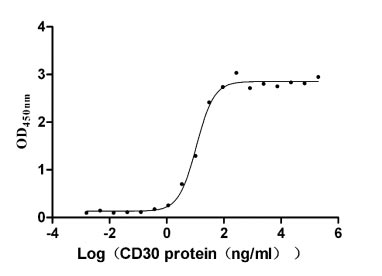
Recombinant Human Tumor necrosis factor ligand superfamily member 8 (TNFSF8), partial (Active)
Express system: Mammalian cell
Species: Homo sapiens (Human)
-
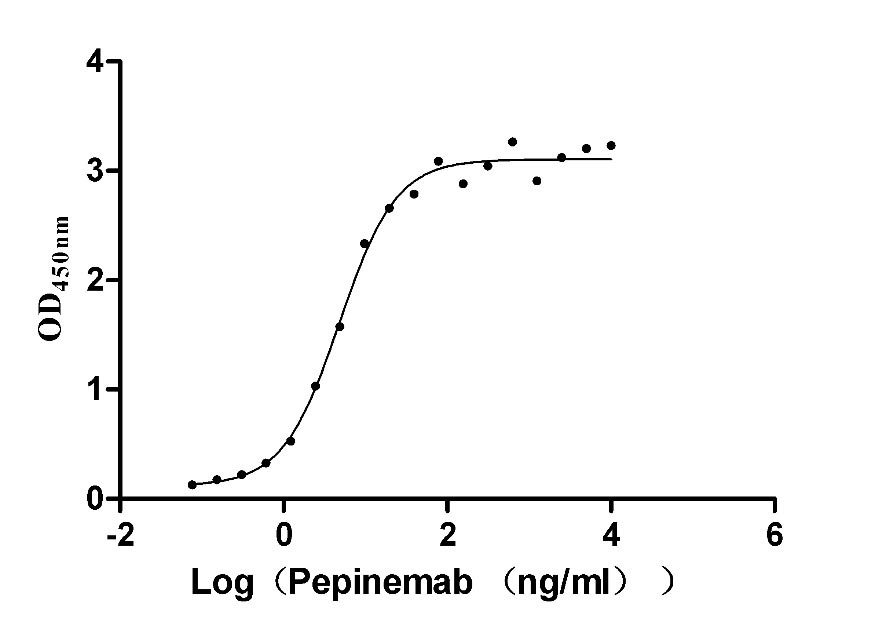
Recombinant Human Semaphorin-4D (SEMA4D), partial (Active)
Express system: Mammalian cell
Species: Homo sapiens (Human)
-
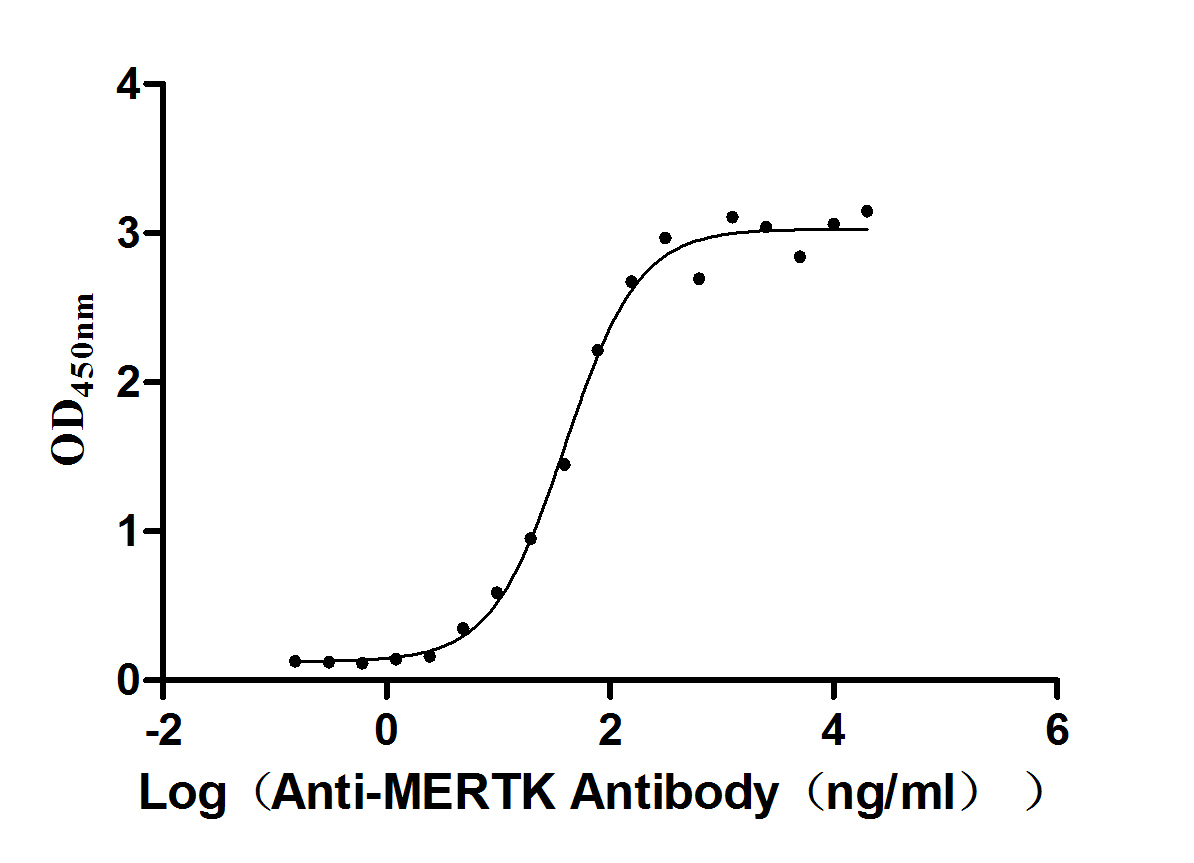
Recombinant Human Tyrosine-protein kinase Mer (MERTK), partial (Active)
Express system: Mammalian cell
Species: Homo sapiens (Human)
-
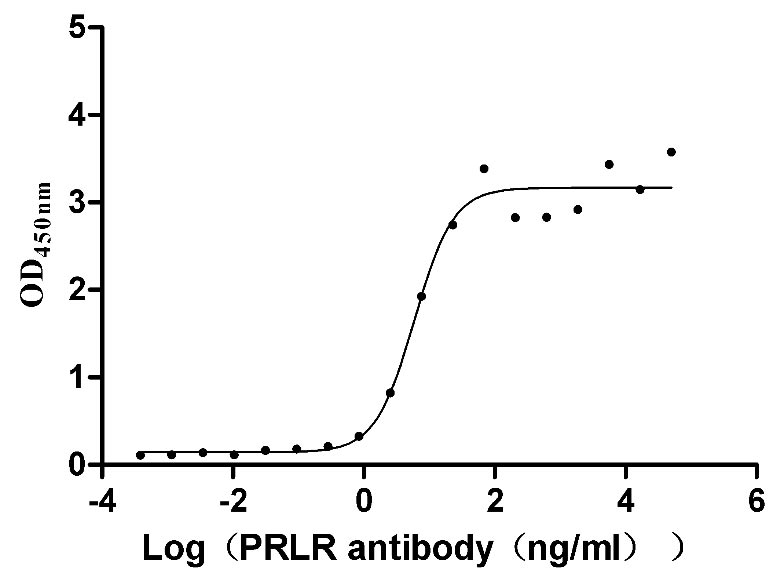
Recombinant Mouse Prolactin receptor (Prlr), partial (Active)
Express system: Mammalian cell
Species: Mus musculus (Mouse)
-
-AC1.jpg)
Recombinant Human Angiopoietin-2 (ANGPT2) (Active)
Express system: Mammalian cell
Species: Homo sapiens (Human)
-
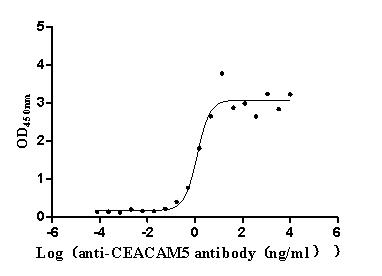
Express system: Mammalian cell
Species: Homo sapiens (Human)
-
-AC1.jpg)
Recombinant Human Dickkopf-related protein 1 (DKK1) (Active)
Express system: Mammalian cell
Species: Homo sapiens (Human)
-
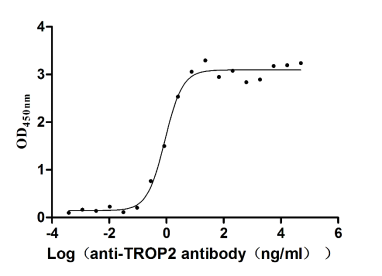
Recombinant Human Tumor-associated calcium signal transducer 2 (TACSTD2), partial (Active)
Express system: Mammalian cell
Species: Homo sapiens (Human)