Recombinant Human Putative serine protease 56 (PRSS56)
-
中文名稱:人PRSS56重組蛋白
-
貨號:CSB-YP317372HU
-
規格:
-
來源:Yeast
-
其他:
-
中文名稱:人PRSS56重組蛋白
-
貨號:CSB-EP317372HU-B
-
規格:
-
來源:E.coli
-
共軛:Avi-tag Biotinylated
E. coli biotin ligase (BirA) is highly specific in covalently attaching biotin to the 15 amino acid AviTag peptide. This recombinant protein was biotinylated in vivo by AviTag-BirA technology, which method is BriA catalyzes amide linkage between the biotin and the specific lysine of the AviTag.
-
其他:
-
中文名稱:人PRSS56重組蛋白
-
貨號:CSB-BP317372HU
-
規格:
-
來源:Baculovirus
-
其他:
-
中文名稱:人PRSS56重組蛋白
-
貨號:CSB-MP317372HU
-
規格:
-
來源:Mammalian cell
-
其他:
產品詳情
-
純度:>85% (SDS-PAGE)
-
基因名:PRSS56
-
Uniprot No.:
-
別名:PRSS56; Serine protease 56; EC 3.4.21.-
-
種屬:Homo sapiens (Human)
-
蛋白長度:Full Length of Mature Protein
-
表達區域:20-603
-
氨基酸序列H PLYTRLPPSA LQVLSAQGTQ ALQAAQRSAQ WAINRVAMEI QHRSHECRGS GRPRPQALLQ DPPEPGPCGE RRPSTANVTR AHGRIVGGSA APPGAWPWLV RLQLGGQPLC GGVLVAASWV LTAAHCFVGA PNELLWTVTL AEGSRGEQAE EVPVNRILPH PKFDPRTFHN DLALVQLWTP VSPGGSARPV CLPQEPQEPP AGTACAIAGW GALFEDGPEA EAVREARVPL LSTDTCRRAL GPGLRPSTML CAGYLAGGVD SCQGDSGGPL TCSEPGPRPR EVLFGVTSWG DGCGEPGKPG VYTRVAVFKD WLQEQMSASS SREPSCRELL AWDPPQELQA DAARLCAFYA RLCPGSQGAC ARLAHQQCLQ RRRRCELRSL AHTLLGLLRN AQELLGPRPG LRRLAPALAL PAPALRESPL HPARELRLHS GSRAAGTRFP KRRPEPRGEA NGCPGLEPLR QKLAALQGAH AWILQVPSEH LAMNFHEVLA DLGSKTLTGL FRAWVRAGLG GRHVAFSGLV GLEPATLARS LPRLLVQALQ AFRVAALAEG EPEGPWMDVG QGPGLERKGH HPLNPQVPPA RQP
-
蛋白標簽:Tag?type?will?be?determined?during?the?manufacturing?process.
The tag type will be determined during production process. If you have specified tag type, please tell us and we will develop the specified tag preferentially. -
產品提供形式:Lyophilized powder
Note: We will preferentially ship the format that we have in stock, however, if you have any special requirement for the format, please remark your requirement when placing the order, we will prepare according to your demand. -
復溶:We recommend that this vial be briefly centrifuged prior to opening to bring the contents to the bottom. Please reconstitute protein in deionized sterile water to a concentration of 0.1-1.0 mg/mL.We recommend to add 5-50% of glycerol (final concentration) and aliquot for long-term storage at -20℃/-80℃. Our default final concentration of glycerol is 50%. Customers could use it as reference.
-
儲存條件:Store at -20°C/-80°C upon receipt, aliquoting is necessary for mutiple use. Avoid repeated freeze-thaw cycles.
-
保質期:The shelf life is related to many factors, storage state, buffer ingredients, storage temperature and the stability of the protein itself.
Generally, the shelf life of liquid form is 6 months at -20°C/-80°C. The shelf life of lyophilized form is 12 months at -20°C/-80°C. -
貨期:Delivery time may differ from different purchasing way or location, please kindly consult your local distributors for specific delivery time.Note: All of our proteins are default shipped with normal blue ice packs, if you request to ship with dry ice, please communicate with us in advance and extra fees will be charged.
-
注意事項:Repeated freezing and thawing is not recommended. Store working aliquots at 4°C for up to one week.
-
Datasheet :Please contact us to get it.
產品評價

相關產品
靶點詳情
-
功能:Serine protease required during eye development.
-
基因功能參考文獻:
- variations in PRSS56 were evaluated in patients with either primary angle-closure glaucoma (PACG) or high hyperopia. PMID: 24227917
- Idenification of a founder mutation in the PRSS56 gene in Tunisian families with posterior microphthalmia and nanophthalmia. PMID: 23820083
- Corneal diameter decreases with decreasing axial length, suggesting posterior microphthalmos and nanophthalmos represent a spectrum of high hyperopia rather than distinct phenotypes. In the Saudi population PRSS56 mutations are the major cause. PMID: 23127749
- PRSS56 is a good candidate for the causal gene for nanophthalmos in a Mexican-Canadian family cohort. PMID: 21850159
- Together, these data suggest that alterations of this serine protease may contribute to a spectrum of human ocular conditions including reduced ocular size and ACG. PMID: 21532570
- Three different mutations in PRSS56, were detected in microphthalmos patients of the Faroese families. PMID: 21397065
顯示更多
收起更多
-
相關疾病:Microphthalmia, isolated, 6 (MCOP6)
-
蛋白家族:Peptidase S1 family
-
組織特異性:Expressed neural retina, cornea, sclera and optic nerve.
-
數據庫鏈接:
Most popular with customers
-
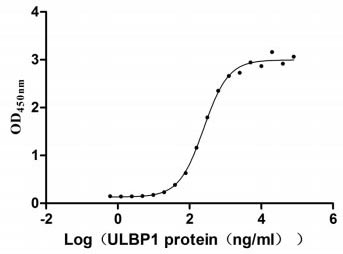
Recombinant Human NKG2-D type II integral membrane protein (KLRK1), partial (Active)
Express system: Mammalian cell
Species: Homo sapiens (Human)
-

Recombinant Human Intestinal-type alkaline phosphatase (ALPI) (Active)
Express system: Mammalian cell
Species: Homo sapiens (Human)
-
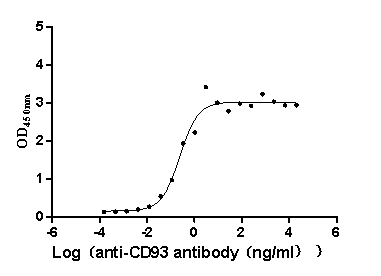
Recombinant Macaca fascicularis CD93 molecule (CD93), partial (Active)
Express system: Mammalian cell
Species: Macaca fascicularis (Crab-eating macaque) (Cynomolgus monkey)
-
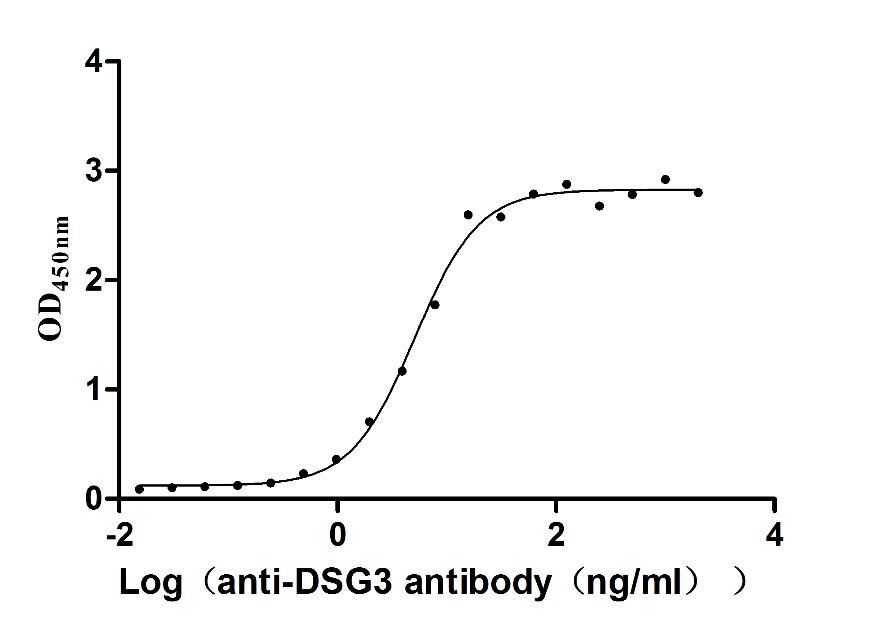
Recombinant Human Desmoglein-3 (DSG3), partial (Active)
Express system: Baculovirus
Species: Homo sapiens (Human)
-
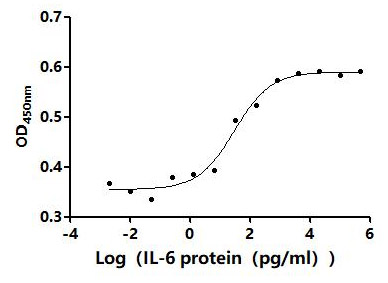
-
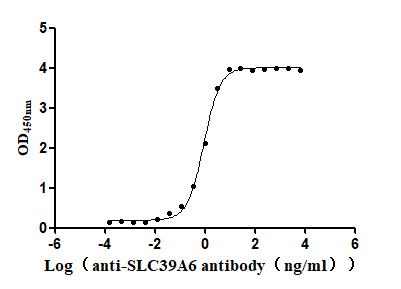
Recombinant Macaca fascicularis Zinc transporter ZIP6 isoform X1(SLC39A6),partial (Active)
Express system: Baculovirus
Species: Macaca fascicularis (Crab-eating macaque) (Cynomolgus monkey)