Phospho-EPHA4 (Y596) Antibody
-
中文名稱:磷酸化-EPHA4 (Y596)兔多克隆抗體
-
貨號:CSB-PA008062
-
規格:¥1090
-
圖片:
-
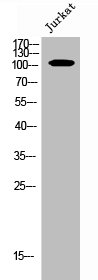 Western Blot analysis of JK cells using Phospho-EphA4 (Y596) Polyclonal Antibody
-
-
其他:
產品詳情
-
Uniprot No.:
-
基因名:
-
別名:Cek 8 antibody; CEK8 antibody; EK8 antibody; eph receptor a4 antibody; EPH-like kinase 8 antibody; EPHA4 antibody; EPHA4_HUMAN antibody; Ephrin type-A receptor 4 antibody; HEK 8 antibody; hEK8 antibody; Receptor protein-tyrosine kinase HEK8 antibody; Sek 1 antibody; SEK antibody; TYRO 1 protein tyrosine kinase antibody; TYRO1 antibody; Tyrosine-protein kinase receptor SEK antibody; Tyrosine-protein kinase TYRO1 antibody
-
宿主:Rabbit
-
反應種屬:Human,Mouse
-
免疫原:Synthesized peptide derived from Human EphA4 around the phosphorylation site of Y596.
-
免疫原種屬:Homo sapiens (Human)
-
標記方式:Non-conjugated
-
抗體亞型:IgG
-
純化方式:The antibody was affinity-purified from rabbit antiserum by affinity-chromatography using epitope-specific immunogen.
-
濃度:It differs from different batches. Please contact us to confirm it.
-
保存緩沖液:Liquid in PBS containing 50% glycerol, 0.5% BSA and 0.02% sodium azide.
-
產品提供形式:Liquid
-
應用范圍:WB, ELISA
-
推薦稀釋比:
Application Recommended Dilution WB 1:500-1:2000 ELISA 1:10000 -
Protocols:
-
儲存條件:Upon receipt, store at -20°C or -80°C. Avoid repeated freeze.
-
貨期:Basically, we can dispatch the products out in 1-3 working days after receiving your orders. Delivery time maybe differs from different purchasing way or location, please kindly consult your local distributors for specific delivery time.
-
用途:For Research Use Only. Not for use in diagnostic or therapeutic procedures.
產品評價

相關產品
靶點詳情
-
功能:Receptor tyrosine kinase which binds membrane-bound ephrin family ligands residing on adjacent cells, leading to contact-dependent bidirectional signaling into neighboring cells. The signaling pathway downstream of the receptor is referred to as forward signaling while the signaling pathway downstream of the ephrin ligand is referred to as reverse signaling. Highly promiscuous, it has the unique property among Eph receptors to bind and to be physiologically activated by both GPI-anchored ephrin-A and transmembrane ephrin-B ligands including EFNA1 and EFNB3. Upon activation by ephrin ligands, modulates cell morphology and integrin-dependent cell adhesion through regulation of the Rac, Rap and Rho GTPases activity. Plays an important role in the development of the nervous system controlling different steps of axonal guidance including the establishment of the corticospinal projections. May also control the segregation of motor and sensory axons during neuromuscular circuit development. In addition to its role in axonal guidance plays a role in synaptic plasticity. Activated by EFNA1 phosphorylates CDK5 at 'Tyr-15' which in turn phosphorylates NGEF regulating RHOA and dendritic spine morphogenesis. In the nervous system, plays also a role in repair after injury preventing axonal regeneration and in angiogenesis playing a role in central nervous system vascular formation. Additionally, its promiscuity makes it available to participate in a variety of cell-cell signaling regulating for instance the development of the thymic epithelium. During development of the cochlear organ of Corti, regulates pillar cell separation by forming a ternary complex with ADAM10 and CADH1 which facilitates the cleavage of CADH1 by ADAM10 and disruption of adherens junctions.
-
基因功能參考文獻:
- MiR-519d down-regulates EphA4 expression in melanoma. PMID: 29093007
- These findings confirmed that EphA4 is a direct target gene of miR-335 and that miR-335 suppresses breast cancer cell proliferation and motility in part by directly inhibiting EphA4 expression. PMID: 28795314
- Therefore EphA4 is an emerging AbetaOs receptor and the activation of the EphA4/c-Abl axis would explain the synaptic spine alterations found in Alzheimer's disease. PMID: 29378302
- These results demonstrate a novel role for SORLA as a physiological and pathological EphA4 modulator. PMID: 29114064
- The expression of both EphA4-FL and EphA4-N was significantly higher in the nervous tissue of SOD1(G93A) compared to wild-type mice suggesting that both forms are modulated during the disease process. PMID: 28153688
- the PI3K/AKT, Wnt/beta-catenin signaling pathways as well as ERK1/2 downstream of EPHA4 receptor activation, play an important role in the regulation of events related with the EMT development, which may be associated with the therapeutic failure in rectal cancer after radiotherapy. PMID: 27632701
- Molecular interactions of EphA4, growth hormone receptor, Jak2, and STAT5B have been described. PMID: 28686668
- Findings demonstrated that mutant alpha2-chimaerin and EphA4 have different genetic interactions in distinct motor neuron pools: abducens neurons use bidirectional ephrin signaling via mutant alpha2-chimaerin to direct growth, while cervical spinal neurons use only ephrin forward signaling PMID: 28346224
- Reduced EphA4 expression is associated with EBV-associated B lymphoma. PMID: 27338098
- No difference was found in the expression of EPHA4 in morphologically normal glands, HGPIN, or prostatic cancer. PMID: 27804940
- we supposed that EphA4 interacted with CDK5 and promoted its expression which in turn enhanced p-AKT expression and promoted cell adhesion-mediated drug resistance in multiple myeloma. PMID: 28351297
- EphA4 was reduced in breast carcinoma, which is associated with high grade, advanced TNM stage, lymph node metastasis, and poor outcome of patients PMID: 27478038
- Host EphA4 expression regulates cancer development mainly via EphA4-mediated IGF1 synthesis signal. PMID: 26923183
- EPHA4 is overexpressed but not functionally active in Sezary syndrome. PMID: 26376612
- The signaling complex appears to integrate the input from FGFR and EphA4, and release the output signal through FRS2alpha. PMID: 20184660
- EphA4 induced accumulation of amyloid precursor protein through a Lyn-mediated pathway. PMID: 24217950
- High Eph A4 expression is associated with choriocarcinoma invasion. PMID: 23429488
- The platelet P2Y12 receptor contributes to granule secretion through Ephrin A4 receptor. PMID: 22273509
- EphA4 gene expression is associated with an improved outcome in patients with resected lung adenocarcinoma, possibly by affecting cancer cell migration and invasion. PMID: 22807579
- Epha4 modulates the vulnerability of motor neurons to axonal degeneration and may represent a new target for therapeutic intervention in ALS. PMID: 22922411
- The present study demonstrates that EphA4 is expressed on neurons in multiple regions of the intact human brain and is markedly upregulated on activated astrocytes after TBI PMID: 22318127
- EphA4 expression maintains adult neural stem cells in an undifferentiated state. PMID: 21444754
- these results suggest that the ligand promiscuity of the Ephs is directly correlated with the structural flexibility of the ligand-binding surface of the receptor. PMID: 20678482
- Eph-A4 expression was significantly associated with tumor proliferative capacity in pancreatic ductal adenocarcinoma. PMID: 19949912
- Eph/ephrin signaling enhances the ability of platelet agonists to cause aggregation provided that those agonists can increase cytosolic Ca(++) and this is accomplished in part by activating Rap1 PMID: 14576067
- The tyrosine kinase receptor EphA4 and the potentially oncogenic transcription factor Twist were highly and selectively expressed in T cells of patients with Sezary Syndrome. PMID: 15313894
- EphA4 is physically associated with alpha(IIb)beta(3) in resting platelets, increases its surface expression when platelets are activated, and colocalizes with alpha(IIb)beta(3) at sites of contact between platelets. PMID: 15994237
- FGF-receptor-mediated mitogen-activated protein kinase stimulation is potentiated in cells costimulated with ephrin-A1 PMID: 16365308
- The expression of EphA4 in astrocyte progenitor cells and in the astrocyte meshwork at the optic nerve head has implications for optic nerve pathologies. PMID: 16574431
- Overexpression of EphA4 receptor is associated with pancreatic ductal adenocarcinoma PMID: 16965393
- overexpression of the EphA4 gene and reduced expression of the EphB2 gene might promote liver metastasis in colorectal cancer PMID: 18695888
- These results indicate that EphA4 plays an important role in malignant phenotypes of glioblastoma by enhancing cell proliferation and migration through accelerating a canonical FGFR signaling pathway. PMID: 18790757
- Overexpression of the receptor tyrosine kinase EphA4 in human gastric cancers. PMID: 18837080
顯示更多
收起更多
-
亞細胞定位:Cell membrane; Single-pass type I membrane protein. Cell projection, axon. Cell projection, dendrite. Cell junction, synapse, postsynaptic density membrane. Early endosome. Cell junction, adherens junction.
-
蛋白家族:Protein kinase superfamily, Tyr protein kinase family, Ephrin receptor subfamily
-
組織特異性:Ubiquitous.
-
數據庫鏈接:
Most popular with customers
-
-
YWHAB Recombinant Monoclonal Antibody
Applications: ELISA, WB, IHC, IF, FC
Species Reactivity: Human, Mouse, Rat
-
Phospho-YAP1 (S127) Recombinant Monoclonal Antibody
Applications: ELISA, WB, IHC
Species Reactivity: Human
-
-
-
-
-