EDA Antibody
-
中文名稱:EDA兔多克隆抗體
-
貨號:CSB-PA039309
-
規格:¥1100
-
圖片:
-
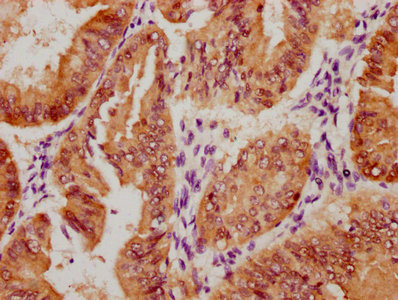
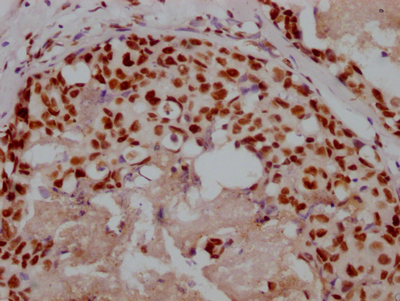
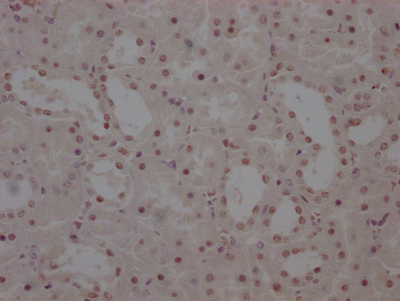
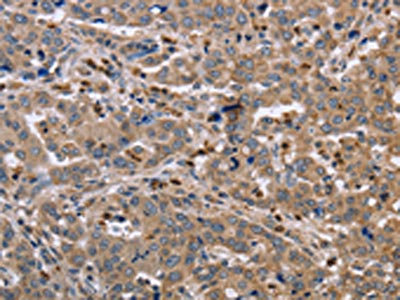 The image on the left is immunohistochemistry of paraffin-embedded Human liver cancer tissue using CSB-PA039309(EDA Antibody) at dilution 1/30, on the right is treated with fusion protein. (Original magnification: ×200)
 -
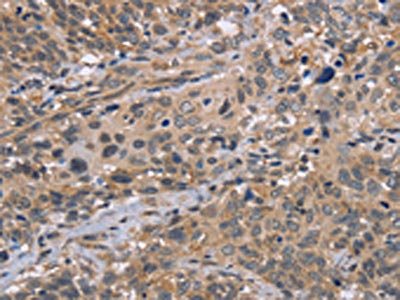 The image on the left is immunohistochemistry of paraffin-embedded Human cervical cancer tissue using CSB-PA039309(EDA Antibody) at dilution 1/30, on the right is treated with fusion protein. (Original magnification: ×200)
-
-
其他:
產品詳情
-
Uniprot No.:
-
基因名:EDA
-
別名:ECTD1 antibody; Ectodermal dysplasia 1; anhidrotic antibody; Ectodermal dysplasia protein antibody; Ectodermal dysplasia; anhidrotic (hypohydrotic) antibody; Ectodysplasin A antibody; Ectodysplasin A; membrane form antibody; Ectodysplasin A; secreted form antibody; ECTODYSPLASIN A1 ISOFORM antibody; ECTODYSPLASIN A2 ISOFORM antibody; ECTODYSPLASIN antibody; Ectodysplasin-A antibody; ED1 A1 antibody; ED1 A2 antibody; ED1 antibody; ED1 GENE antibody; Eda A1 antibody; Eda A2 antibody; eda antibody; EDA protein antibody; EDA protein homolog antibody; EDA_HUMAN antibody; EDA1 antibody; EDA1 GENE antibody; EDA2 antibody; HED antibody; HED1 antibody; ODT1 antibody; Oligodontia 1 antibody; secreted form antibody; STHAGX1 antibody; Ta antibody; Tabby antibody; Tabby protein antibody; X linked anhidroitic ectodermal dysplasia protein antibody; XHED antibody; XLHED antibody
-
宿主:Rabbit
-
反應種屬:Human,Mouse
-
免疫原:Fusion protein of Human EDA
-
免疫原種屬:Homo sapiens (Human)
-
標記方式:Non-conjugated
-
抗體亞型:IgG
-
純化方式:Antigen affinity purification
-
濃度:It differs from different batches. Please contact us to confirm it.
-
保存緩沖液:-20°C, pH7.4 PBS, 0.05% NaN3, 40% Glycerol
-
產品提供形式:Liquid
-
應用范圍:ELISA,IHC
-
推薦稀釋比:
Application Recommended Dilution ELISA 1:2000-1:5000 IHC 1:50-1:200 -
Protocols:
-
儲存條件:Upon receipt, store at -20°C or -80°C. Avoid repeated freeze.
-
貨期:Basically, we can dispatch the products out in 1-3 working days after receiving your orders. Delivery time maybe differs from different purchasing way or location, please kindly consult your local distributors for specific delivery time.
-
用途:For Research Use Only. Not for use in diagnostic or therapeutic procedures.
產品評價

相關產品
靶點詳情
-
功能:Cytokine which is involved in epithelial-mesenchymal signaling during morphogenesis of ectodermal organs. Functions as a ligand activating the DEATH-domain containing receptors EDAR and EDA2R. May also play a role in cell adhesion.; Binds only to the receptor EDAR, while isoform 3 binds exclusively to the receptor EDA2R.; Binds only to the receptor EDA2R.
-
基因功能參考文獻:
- Mutations were identified in all seven families, including four previously reported missense mutations (p.M1T, p.R156C, p.G299S, and p.A349T) and three novel mutations; missense mutation (p.Q358 L), indel (P228Tfs*52), as well as a large deletion. PMID: 30117778
- A novel functional skipping-splicing EDA mutation was considered to be the cause of HED in the two pedigrees reported here. PMID: 29676859
- Case Report: EDA mutation causing hypohidrotic ectodermal dysplasia with hyperplasia of the sebaceous glands in a Chinese patient. PMID: 28498389
- This is the first analysis of the role of Eda in the root, showing a direct role for this pathway during postnatal mouse development, and it suggests that changes in proliferation and angle of HERS may underlie taurodontism in a range of syndromes. PMID: 28813629
- Data suggest that EDA is highly expressed in meibomian glands and is detectible in human tears but not serum; EDA protein is secreted from meibomian glands and promotes corneal epithelial cell proliferation through regulation of EGFR signaling pathway. (EGFR = epidermal growth factor receptor) PMID: 28655773
- EDA is an important candidate gene for two developmental diseases sharing the common feature of the congenital lack of teeth. In addition, these results can support the hypothesis that X-linked HED and EDA-related NTA are the same disease with different degrees of severity. PMID: 27054699
- EDA-A2 and its receptor XEDAR are overexpressed in epithelial cells of salivary glands in Sjogren's syndrome patients, in comparison with healthy individuals. The EDA-A2/XEDAR system in these cells is involved in the induction of apoptosis via CASP3 activation. PMID: 26659383
- Based on a computerized protein structure analysis, we suggest that the change p.Arg289His in EDA impairs protein stabilization and thus might possibly be involved in the development of oligodontia concomitant with a mild ED phenotype. PMID: 26753551
- we identified a novel and three reported EDA missense mutations in four of six patients with X-linked hypohidrotic ectodermal dysplasia. Missense mutations and the mutations affecting the tumor necrosis factor homology domain were correlated with fewer missing teeth. PMID: 26411740
- hemizygous frame-shift mutation c. 731delG (p.R244Qfs*36) underlies hypohidrotic ectodermal dysplasia in a Japanese family PMID: 25438642
- Our findings indicate that a novel mutation (c.878T>G) of EDA is associated with XLHED and adds to the repertoire of EDA mutations. PMID: 26634545
- We found a novel missense mutation in exon 1 of the EDA1 gene in a putative Mayan family from Mexico with XL-HED. PMID: 25626993
- A novel missense mutation in the EDA gene in a Chinese family with X-linked hypohidrotic ectodermal dysplasia. PMID: 25846883
- novel nonsense mutation in Chinese family PMID: 25296636
- dentified a novel deletion mutation located in exon 1 which if expressed would produce a highly truncated protein in a Chinese Han family with X-linked hypohidrotic ectodermal dysplasia PMID: 24985548
- novel non-synonymous mutation in ectodysplasin A (EDA) associated with non-syndromic X-linked dominant congenital tooth agenesis PMID: 25203534
- novel one-nucleotide deletion mutation (c.855delG) of EDA in exon 8 which caused premature termination of the polypeptide at amino acid 307 was confirmed PMID: 23635427
- hemizygous nonsense mutation c.739C>T (p.Q247X) in exon 4 associated with x-linked hypohidrotic ectodermal dysplasia PMID: 24503206
- WNT10A and EDA digenic mutations could result in oligodontia and syndromic tooth agenesis in the Chinese population. Moreover, our results will greatly expand the genotypic spectrum of tooth agenesis. PMID: 24312213
- involvement of PAX9, EDA, SPRY2, SPRY4, and WNT10A as risk factors for MLIA. uncovered 3 strong synergistic interactions between MLIA liability and MSX1-TGFA, AXIN2-TGFA, and SPRY2-SPRY4 gene pairs. 1st evidence of sprouty genes in MLIA susceptibility. PMID: 24554542
- The mutation described resulted in a deletion of the highly conserved TNF homology sequence responsible for binding to EDA1R. PMID: 22835214
- Case of hypohidrotic ectodermal dysplasia caused by a large deletion mutation in the EDA gene. In a Japanese boy, 3 .months old PMID: 23293949
- The deletion and missense mutation in ED1 gene is associated with X-linked hypohidrotic ectodermal dysplasia families. PMID: 23926003
- most of these Chinese XLHED carriers' have hypermethylated EDA promoter. PMID: 23626789
- Identification of a novel c.822 G>T mutation of EDA gene in a Chinese family with X-linked hypohidrotic ectodermal dysplasia. PMID: 23744312
- identified novel missense mutation (c.779 T>G) in Nonsyndromic Hypodontia. mutation results in Ile260Ser substitution in the TNF homology domain. alteration may induce conformational change in hydrophobic center of TNF homology domain. PMID: 23625373
- identified heterozygous nonsense mutation c.874G>T (p.Glu292X) in TNF homology domain of EDA in all affected females. phenotype variability in heterozygous female carriers may occur due to differential pattern of X-chromosome inactivation PMID: 23603338
- Various mutations of ED1 gene were detected. PMID: 22875504
- The finding that EDAR370A attenuates hypohidrotic ectodermal dysplasia symptoms provides the first in vivo evidence that allele is a more potent signalling molecule than EDAR370V. PMID: 21916884
- we report a novel mutation of the EDA gene identified in a Korean family with X-linked hypohidrotic ectodermal dysplasia. PMID: 22004506
- Direct DNA sequencing of the whole coding region of EDA revealed a novel missense mutation, p.Leu354Pro in a patient affected with XLHED. PMID: 22008666
- EDA1 gene was the most common hypohidrotic/anhidrotic ectodermal dysplasia disease-causing gene PMID: 20979233
- there exists a correlation between the phenotypes and genotypes of XLHED and NSH subjects harboring EDA mutations PMID: 21457804
- Systematic mapping of EDA mutations together with the analysis of objective clinical data may help to distinguish functionally crucial mutations from those allowing residual activity of the gene product. PMID: 21357618
- association in dental crowding in the Hong Kong Chinese population PMID: 21724072
- Direct sequencing of the EDA-A1 gene in affected individuals of the 3 families revealed the same missense mutation. Microsatellite marker analysis showed a shared haplotype among the affected members of both families, suggesting a common founder mutation. PMID: 20628232
- This study further confirms the differential effect of the mutations in EDA gene that define the pathogenic basis of X-linked recessive isolated hypodontia. PMID: 21091672
- Data show that 25 different mutations on EDA and EDAR genes were detected in HED patients. PMID: 20236127
- A crucial role of the EDA-A2/ectodysplasin A2 (XEDAR) interaction is revealed in the p53-signaling pathway. PMID: 20501644
- analysis of Missense mutation of the EDA gene in a Jordanian family with X-linked hypohidrotic ectodermal dysplasia [case report] PMID: 20486090
- EDA has been identified as a nonsyndromic tooth agenesis gene, X-linked. PMID: 19816326
- An in vitro functional analysis was performed of six selective tooth agenesis-causing EDA mutations (one novel and five known) that are located in the C-terminal tumor necrosis factor homology domain of the protein. PMID: 19623212
- The structure of the EDA1 gene in a patient with anhidrotic ectodermal dysplasia PMID: 12673367
- The ED1 gene was identified as a responsive gene for X-LINKED HYPOHIDROTIC ECTODERMAL DYSPLASIA. PMID: 12920369
- identified ED1 mutations including three novel mutations by sequencing genomic DNAs from eight unrelated Japanese X-linked hypohidrotic ectodermal dysplasia families PMID: 12930312
- point mutation (G1149A) in exon 8 changes codon 291 from glycine to arginine causing X-linked hypohidrotic ectodermal dysplasia PMID: 15663448
- isoforms of EDA-A5 and A5',activated NF-kappaB through receptors EDAR and XEDAR PMID: 16423472
- EDA signaling has its biological significance in inducing development and morphogenesis of sweat glands and in maintaining physiological function of skin. PMID: 16752854
- EDA signaling has a role in skin appendage development [review] PMID: 17102627
- An amino acid substitution in ectodysplasin A is associated with X-linked dominant incisor hypodontia. PMID: 17256800
顯示更多
收起更多
-
相關疾病:Ectodermal dysplasia 1, hypohidrotic, X-linked (XHED); Tooth agenesis, selective, X-linked, 1 (STHAGX1)
-
亞細胞定位:Cell membrane; Single-pass type II membrane protein.; [Ectodysplasin-A, secreted form]: Secreted.
-
蛋白家族:Tumor necrosis factor family
-
組織特異性:Not abundant; expressed in specific cell types of ectodermal (but not mesodermal) origin of keratinocytes, hair follicles, sweat glands. Also in adult heart, liver, muscle, pancreas, prostate, fetal liver, uterus, small intestine and umbilical chord.
-
數據庫鏈接:
Most popular with customers
-
-
Phospho-YAP1 (S127) Recombinant Monoclonal Antibody
Applications: ELISA, WB, IHC
Species Reactivity: Human
-
-
-
-
-
-